
Vouchers · 9 cash routes compared
Cash Vouchers and Crypto: The Pennsylvania Hub
Nine ways to turn physical dollars into digital value without a bank account — from supermarket coin kiosks to pharmacy reload networks. Priced honestly, including the ones we would steer you away from.
Our starting point for readers in Pennsylvania is a platform that actually holds the paperwork: a FinCEN-registered Money Services Business with a Pennsylvania Money Transmitter Licence (No. 112703) issued by the Department of Banking and Securities, plus licences across all 50 states and NMLS ID 1804170.
Reviewed & updated August 2026
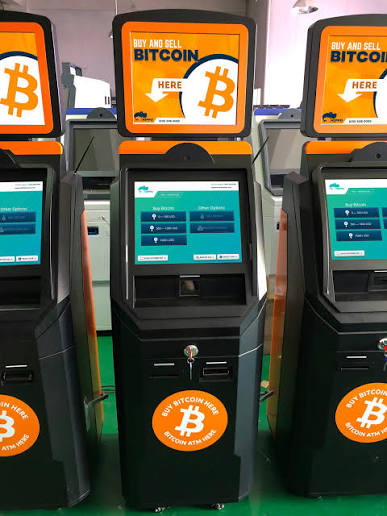
This hub exists for a specific reader: someone in Pennsylvania with cash in hand and no banking relationship, looking for a way into cryptocurrency that does not involve paying a convenience store machine twenty percent.
Vouchers and reload networks fill that gap. You pay cash at a counter, receive or redeem a code, and value moves. Most are payment rails rather than crypto products — the conversion is two steps — and a few redeem directly into cryptocurrency in one.
We have reviewed nine of them individually, and the honest summary is that the category sits in the middle of the Pennsylvania cost range: better than a standalone crypto kiosk, worse than a bank transfer, and constrained by where you live and which platforms accept what.
Every route compared
"Direct" means the product redeems into cryptocurrency itself. "Indirect" means it moves value to something else, and crypto is a further step. Costs are all-in including any embedded spread, which is the number that actually matters.
| Product | Route | Typical cost | US availability |
|---|---|---|---|
| Flexepin | Indirect | Face value plus any processing fee disclosed at checkout | Available in the United States, Canada and Australia |
| Neosurf | Indirect | Face value plus reseller processing fee | Limited US presence; primarily European retail network |
| CashtoCode | Indirect | No CashtoCode charge; reseller fulfilment fees may apply | Available in the US through participating retail partners |
| Paysafecard | Indirect | Face value; a maintenance fee can apply after extended dormancy | Limited direct US retail; primarily European network |
| Green Dot MoneyPak | Indirect | $5.95 flat service fee | 70,000+ US retailers including CVS, Walgreens, Rite Aid, Dollar General, 7-Eleven |
| VanillaDirect Reload | Indirect | Flat service fee at the register — confirm at the shelf | Participating US retailers — check the locator |
| CryptoVoucher | Direct | Built into the voucher price — compare against spot before buying | Sold online; redeemable for crypto |
| Bitnovo Voucher | Direct | Built into the voucher price | European-focused; check availability for US residents |
| Coinme at Coinstar | Direct | Around 4% transaction fee plus a spread; some locations quote a cash exchange fee near 16.5% | Supermarket coin-counting kiosks across Pennsylvania |
Terms verified August 2026. Operators change pricing, retail partners and territorial restrictions without notice — confirm on the operator's own site before relying on any detail.
Before you use any of these, check one thing
If you can open a bank or credit union account, an ACH-funded purchase on a platform holding a Pennsylvania Money Transmitter Licence (No. 112703) and FinCEN MSB registration costs under 1% all-in. Pennsylvania's credit union sector is deep, opening deposits are commonly $5–$25, and several institutions offer second-chance products.
Every product, reviewed
Cash voucher (PIN)
Cash-at-counter eVoucher
Cash voucher (16-digit PIN)
Cash reload network
Green Dot MoneyPak
Green Dot Corporation · Indirect route
Cash reload at 70,000+ US retailers for a flat $5.95; funds land on your debit card.
Read the guide →VanillaDirect Reload
InComm Payments / Vanilla · Indirect route
Barcode-based cash reload; frequently confused with Vanilla gift cards.
Read the guide →Crypto-redeemable voucher
Retail cash-to-crypto
How to choose, in order
- Can you open a bank or credit union account?
If yes, stop here. An ACH-funded purchase on a licensed exchange costs under 1% and the whole category becomes unnecessary. Several Pennsylvania credit unions offer second-chance accounts for people with past overdraft or ChexSystems history.
- Is there a participating retailer near you?
Physical reach is the binding constraint outside the metros. MoneyPak publishes the widest network at 70,000+ US retailers, which realistically reaches rural Pennsylvania counties that nothing else does.
- Does your destination platform accept the method?
Confirm before buying anything pre-purchased. CashtoCode sidesteps this entirely by generating the code at the destination checkout.
- Is the operator licensed to serve Pennsylvania?
Check NMLS Consumer Access and the FinCEN MSB registry. Several products in this category are European operations that may not serve US residents at all.
- Convert in one large amount, not several small ones
Flat fees do not scale. This single decision moves your effective rate by a factor of twenty.
Why voucher codes are a scammer's favourite
Every product in this hub shares one structural property: the code is a bearer instrument. Whoever holds the number holds the value. There is no account holder, no chargeback, no reversal, and no trace once the value is spent.
That is precisely why voucher and reload networks feature so heavily in American consumer fraud, and why Green Dot has redesigned MoneyPak more than once in response to abuse.
The Pennsylvania scripts are identical to the gift card and crypto kiosk versions. A caller impersonates PECO, PPL, Penelec, Met-Ed, Duquesne Light, the Social Security Administration, the IRS, a county court, a sheriff's office or a grandchild in custody. Urgency is manufactured. The victim is directed to a nearby CVS, Walgreens, Rite Aid, Dollar General, 7-Eleven or supermarket, told to buy a voucher or make a reload, and asked to read the number over the phone.
No legitimate organisation accepts payment by voucher code or cash reload. Not a utility, a government agency, a court, a police department, a debt collector, an employer or a landlord. Never buy a voucher at someone else's instruction. Never share a code. Never add a card to a reload profile that is not yours.
Pennsylvania ranked sixth nationally for internet crime complaints in the FBI's 2025 Internet Crime Report, with more than 31,000 complaints and over $537 million in reported losses. The state's Bureau of Consumer Protection reported that 85% of the crypto fraud complaints it received came from people aged 60 or over. Our Pennsylvania scam guide covers the current scripts by region.
The tax position
Buying a voucher with dollars is not a taxable event. It is a purchase of a payment instrument.
What matters is the cryptocurrency at the end of the chain. The price you effectively pay sets your cost basis, and the eventual disposal — selling, spending, or trading for another asset — is the taxable event. Pennsylvania levies a flat 3.07% personal income tax on the net gain, with federal capital gains rules applying separately.
Two Pennsylvania specifics worth knowing. The Commonwealth does not permit capital loss carryforward, so a loss exceeding your same-year gains is permanently lost for state purposes. And keeping a clean record of what you actually paid — including all voucher and platform fees, which form part of your basis — matters more here than in most states.
Our Pennsylvania crypto tax guide works through disposals, basis and record-keeping with examples.
Cash vouchers and crypto — FAQ
What is a cash voucher and how does it reach crypto?
A voucher is a prepaid code bought with cash and redeemed on a participating platform. Most are payment rails rather than crypto products, so the route is indirect: cash → voucher → platform → crypto. A few products redeem directly into cryptocurrency in one step.
Which voucher works best in Pennsylvania?
For physical reach, Green Dot MoneyPak — more than 70,000 US retailers including CVS, Walgreens, Rite Aid, Dollar General and 7-Eleven, for a flat $5.95. For a genuine US voucher network, Flexepin. For the best structural design, CashtoCode, where the barcode is generated at the destination checkout so value can never be stranded.
Are vouchers cheaper than a bitcoin ATM?
Usually. Voucher routes typically run 5–12% all-in against 8–23% at a standalone crypto kiosk, and the pricing is more transparent because you can calculate the total before committing rather than discovering an exchange-rate spread after inserting cash.
Do I need a bank account to use a voucher?
No — that is the entire point of the category. But if you can open one, an ACH-funded purchase on a licensed exchange costs under 1%, which no voucher route can approach. Several Pennsylvania credit unions have $5–$25 opening deposits and second-chance products.
Is it safe to share a voucher code?
Never. Voucher codes are bearer instruments — whoever holds the number holds the value — with no chargeback and no reversal. No legitimate organisation accepts payment by voucher code. Any such request is fraud, one hundred percent of the time.
Do voucher operators need a Pennsylvania licence?
Any business transmitting virtual currency for Pennsylvania customers is expected to hold a Money Transmitter Licence from the Department of Banking and Securities, following a policy statement effective 15 October 2024. Verify any operator in NMLS Consumer Access and the FinCEN MSB registry.
Do vouchers expire?
Terms vary by issuer and this category is not always treated the same way as gift cards under federal law. Paysafecard applies a maintenance fee after extended dormancy. Do not buy and forget — redeem promptly.
The route that beats every voucherPA Money Transmitter Licence 112703 · FinCEN-registered MSB · NMLS ID 1804170 — bank funding at under 1% all-in.
Get started