
Vouchers · Cash reload network
Green Dot MoneyPak and Crypto in Pennsylvania
Not a voucher exactly — a cash reload. Buy it at a Pennsylvania pharmacy, load $20 to $500, and the money lands on a debit card you already hold. The widest physical footprint of anything in this hub.
Our starting point for readers in Pennsylvania is a platform that actually holds the paperwork: a FinCEN-registered Money Services Business with a Pennsylvania Money Transmitter Licence (No. 112703) issued by the Department of Banking and Securities, plus licences across all 50 states and NMLS ID 1804170.
Reviewed & updated August 2026
MoneyPak is different from the other products in this hub, and the difference is what makes it useful. It is not a stored-value voucher you spend at a merchant — it is a mechanism for moving physical cash onto a debit card you already have.
You pick up a MoneyPak in the prepaid section of a participating retailer, take it to the cashier and add cash, then use the MoneyPak.com profile to move those funds onto an eligible card. From there the money behaves like any other debit balance.
For a Pennsylvania reader converting cash into cryptocurrency without a bank account, that is a genuinely practical bridge — and the retail reach is far wider than any voucher network, at more than 70,000 US locations.
How MoneyPak works
Four steps. You collect a MoneyPak from the prepaid section of a participating retailer. You take it to the cashier and add cash — between $20 and $500 — with a flat service fee applied. First-time users create a profile at MoneyPak.com and add an eligible card. You then follow the instructions to move the funds onto that card.
The fee is a flat $5.95 at the register, with published materials also describing a service fee of up to $4.95 in some configurations — check the price at the shelf, because it is charged at purchase rather than deducted from the load.
Because it is a flat fee, the proportional cost varies enormously by load size. On a $20 load, $5.95 is nearly 30%. On a $500 load, it is 1.2%. If you use this product, load the maximum you can sensibly use.
MoneyPak is accepted by most Visa, Mastercard and Discover debit cards, plus more than 200 prepaid debit card brands. Your own bank debit card is generally eligible, which is worth knowing — this is not exclusively a prepaid product.
Where to find it in Pennsylvania
This is MoneyPak's main advantage. The network covers more than 70,000 retailers nationwide, including chains with deep Pennsylvania presence: CVS, Walgreens, Rite Aid, Dollar General and 7-Eleven, among others.
Rite Aid in particular has historically had a dense Pennsylvania footprint, and Dollar General has expanded aggressively into the smaller boroughs and rural areas that voucher networks and crypto kiosks do not reach. That combination means MoneyPak is realistically available in parts of the Commonwealth where nothing else in this hub is — Cambria, Lycoming, Lawrence and the northern tier included.
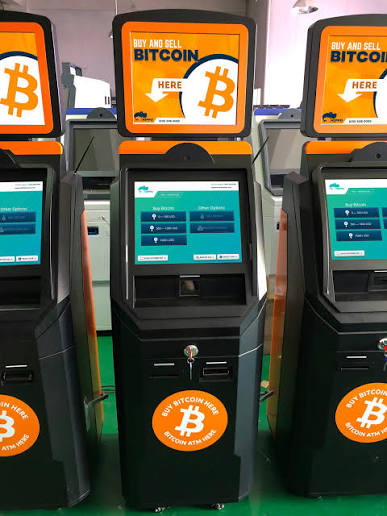
Compare that with the crypto kiosk network, which concentrates in Philadelphia, its inner suburbs, the Lehigh Valley and Greater Pittsburgh and thins to nothing across most of the state's land area. For a rural Pennsylvania reader without a bank account, MoneyPak plus a prepaid card is often the only practical cash-to-digital route that does not involve a long drive.
Confirm participation at your specific store before travelling — retail partnerships change.
Using MoneyPak toward a crypto purchase
MoneyPak does not buy cryptocurrency. It moves cash onto a debit card. What happens next is the same as any debit card purchase.
The realistic chain for a Pennsylvania buyer without a bank account: cash → MoneyPak → prepaid debit card → exchange purchase by card. Each step has a cost, and you need to add them together honestly.
Take $300. The MoneyPak fee is $5.95, roughly 2%. The exchange's card processing fee is typically 2–4%, call it 3%. All-in you are around 5% — better than every crypto kiosk in Pennsylvania and considerably worse than a bank transfer.
Two constraints. The prepaid card must be registered with your name and Pennsylvania address so address verification passes at the exchange. And many exchanges decline prepaid BINs outright as a fraud control, regardless of registration. Our prepaid Visa page covers that in detail.
If your own bank debit card is the eligible card, this step is unnecessary — you would simply deposit the cash at your bank instead, at no fee.
The route that costs a fraction of any voucher
If you have a bank or credit union account, an ACH-funded purchase on a platform holding a Pennsylvania Money Transmitter Licence (No. 112703), FinCEN MSB registration and NMLS ID 1804170 costs under 1% all-in — against 5–12% for any voucher route.
The fee arithmetic, in dollars
Worth doing explicitly, because a flat fee behaves very differently across load sizes.
| Cash loaded | Fee | Effective rate | Verdict |
|---|---|---|---|
| $20 | $5.95 | 29.8% | Worse than a kiosk |
| $100 | $5.95 | 6.0% | Acceptable |
| $300 | $5.95 | 2.0% | Good |
| $500 | $5.95 | 1.2% | Very good |
The lesson is unambiguous: load large. Five separate $100 loads cost $29.75 in fees; one $500 load costs $5.95. That is nearly $24 of avoidable expense for the same money moved.
Note this is only the reload cost. Whatever the exchange charges for a card-funded purchase stacks on top.
MoneyPak fraud — a long and specific history
MoneyPak has one of the longest histories of scam abuse of any product in this hub, and Green Dot has redesigned the product more than once in response.
The original abuse pattern was simple: a scammer instructed a victim to buy a MoneyPak and read the number over the phone, which allowed the scammer to claim the funds. Product changes — requiring a registered profile and moving funds to a card you have added — have made that harder, but the telephone script has adapted rather than disappeared.
The current Pennsylvania variants involve a caller impersonating PECO, PPL, Penelec, Met-Ed, the Social Security Administration, the IRS, a county court or a grandchild in custody, walking the victim through the whole flow including adding a card the scammer controls.
Never buy a MoneyPak at someone else's instruction, and never share the number with anyone. No legitimate organisation accepts payment this way. Not a utility, an agency, a court, a police department, a debt collector or a family member who telephoned you. Never add a card to your MoneyPak profile that is not yours.
Pennsylvania's Bureau of Consumer Protection reported that 85% of crypto fraud complainants were aged 60 or over, and reload-network fraud skews the same way. Report attempts to the PA Attorney General and IC3.
Our verdict for Pennsylvania readers
MoneyPak is the most practically available cash-to-digital product in this hub for Pennsylvania, because the retail network genuinely reaches the parts of the state everything else misses.
Used well — a $500 load rather than a $20 one — the reload step costs around 1.2%, which is remarkable for a cash product. Used badly, on small amounts, it is worse than a crypto kiosk.
Its limitation is that it is only the first step. Getting from a debit card to cryptocurrency still requires an exchange that accepts your card, and prepaid BIN declines are common.
The honest hierarchy for a Pennsylvania reader without a bank account: open a credit union account if you possibly can, because the sector here is deep and several institutions offer second-chance products with $5–$25 minimums. If that is closed to you, MoneyPak into a registered prepaid card is a reasonable bridge at around 5% all-in. A standalone crypto kiosk at 8–23% should be the last option, not the first.
Our cash-to-crypto guide compares every Pennsylvania route side by side.
Green Dot MoneyPak — FAQ
What does a MoneyPak cost?
A flat service fee — commonly $5.95, with materials also describing a service fee of up to $4.95 in some configurations — charged at the register. Because it is flat, load large: $5.95 is 1.2% on a $500 load and nearly 30% on a $20 one.
Where can I buy a MoneyPak in Pennsylvania?
At more than 70,000 US retailers, including CVS, Walgreens, Rite Aid, Dollar General and 7-Eleven. That gives genuine coverage in rural Pennsylvania counties where crypto kiosks and voucher networks do not reach.
How much cash can I load?
Between $20 and $500 per MoneyPak. It works with most Visa, Mastercard and Discover debit cards plus more than 200 prepaid debit brands — including, in many cases, your own bank debit card.
Can MoneyPak buy crypto directly?
No. It moves cash onto a debit card; buying crypto is a separate step. The full chain for someone without a bank account runs cash → MoneyPak → registered prepaid card → exchange, at roughly 5% all-in.
Someone told me to buy a MoneyPak and give them the number. Is that a scam?
Yes, without exception. MoneyPak has a long history of exactly this abuse. Never buy one at someone else's instruction, never share the number, and never add a card to your profile that is not yours.
Other cash routes in this hub
Each of these behaves differently on US availability, cost and whether it reaches cryptocurrency directly or through an intermediate step.
Licensed, verifiable, and far cheaperPA Money Transmitter Licence 112703 · FinCEN-registered MSB · NMLS ID 1804170.
Get started