
Vouchers · Retail cash-to-crypto
Coinme at Coinstar: Supermarket Cash to Crypto in Pennsylvania
The coin-counting machine in your supermarket lobby now sells bitcoin. Far wider coverage than any standalone crypto kiosk network — and the pricing needs reading carefully.
Our starting point for readers in Pennsylvania is a platform that actually holds the paperwork: a FinCEN-registered Money Services Business with a Pennsylvania Money Transmitter Licence (No. 112703) issued by the Department of Banking and Securities, plus licences across all 50 states and NMLS ID 1804170.
Reviewed & updated August 2026
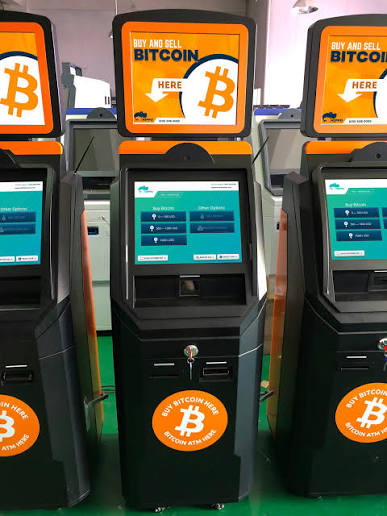
This is not a voucher in the conventional sense, and we include it here because functionally it occupies the same slot: a physical, cash-accepting route into cryptocurrency that requires no bank account.
The model runs on existing infrastructure. Coinstar coin-counting kiosks sit in supermarket lobbies across Pennsylvania, and through a partnership with a crypto provider a large number of them now sell bitcoin. Because the footprint was already built for a different purpose, coverage is dramatically wider than any standalone crypto kiosk network — hundreds of Pennsylvania supermarkets rather than a few hundred machines statewide.
This page covers how the transaction actually works, the fee structure in detail, how coverage compares with the crypto ATM network, and where it sits among Pennsylvania's cash routes.
How the transaction works
You provide a phone number at the kiosk and complete an account with the crypto provider. Creating that account before you arrive saves real time at the machine — doing the whole setup standing in a supermarket lobby with a queue behind you is the main complaint people have about this route.
You then insert cash. The machine shows the total amount of cryptocurrency being purchased, less fees, for confirmation before you complete the transaction. Bitcoin is credited to your provider account, from which you can move it to a wallet you control.
The kiosks operate during store hours rather than 24 hours, which distinguishes them from standalone crypto ATMs in convenience stores. In practice that is rarely a constraint given Pennsylvania supermarket hours.
Note that this is a buy-only route. These kiosks do not dispense cash for cryptocurrency — for that you need a two-way crypto ATM, covered in our bitcoin ATM guide.
The fee structure, read carefully
This is where attention is required, because the published numbers vary by configuration and location.
The commonly cited structure is a transaction fee of around 4% plus a spread charged by the provider. Separately, some locations quote a cash exchange fee near 16.5% — in one widely reported configuration, a $100 cash transaction produced roughly $83.50 of bitcoin.
Those two descriptions are not contradictory; they reflect different fee configurations at different locations and points in time. The practical consequence is that you cannot assume the rate. The machine shows the total before you confirm, and that screen is the only number that matters.
Check the market price of bitcoin on your phone before you start. Insert the smallest note the machine accepts, read the quoted total, and divide. If the effective rate is worse than you expected, cancel before confirming — the machine allows it. This is the same discipline we recommend for standalone crypto ATMs, and it is the only price pressure this market receives.
Our Pennsylvania fee comparison puts these numbers alongside every standalone kiosk operator in the state.
Coverage across Pennsylvania
Coverage is the genuine advantage. Because the kiosks run on an existing supermarket footprint, they reach parts of Pennsylvania that standalone crypto ATMs do not.
Standalone crypto kiosks concentrate heavily in Philadelphia and its inner suburbs, the Lehigh Valley and Greater Pittsburgh, thinning to almost nothing across most of the Commonwealth's land area. Supermarket coin kiosks follow grocery distribution, which is far more evenly spread — the chains operating across Pennsylvania reach small boroughs and rural county seats that no crypto ATM operator finds economic.
For a reader in Cambria County, Lycoming County or the northern tier, that difference is the whole decision. A twenty-five-minute drive to a crypto ATM that may be offline compares poorly with the supermarket you already shop at.
Coverage is not universal — not every Coinstar kiosk offers the crypto function. Check the provider's locator before travelling.
The route that costs a fraction of any voucher
If you have a bank or credit union account, an ACH-funded purchase on a platform holding a Pennsylvania Money Transmitter Licence (No. 112703), FinCEN MSB registration and NMLS ID 1804170 costs under 1% all-in — against 5–12% for any voucher route.
How it compares with a standalone crypto ATM
| Factor | Supermarket coin kiosk | Standalone crypto ATM |
|---|---|---|
| Typical all-in cost | ~5–16% | 8–23% |
| Coverage in rural PA | Good — follows grocery footprint | Poor to nonexistent |
| Hours | Store hours | Often 24 hours |
| Sell for cash | No | Only at two-way units |
| Setting | Staffed supermarket lobby | Often unstaffed convenience store |
| Assets | Bitcoin primarily | Varies by operator |
The supermarket route generally wins on cost, coverage and personal safety. The standalone ATM wins on hours and, at two-way machines, on the ability to sell for cash.
Safety and fraud
The supermarket setting is meaningfully safer than an unstaffed convenience store vestibule — staffed premises, cameras, daylight hours and other shoppers present. That matters when you are carrying cash.
The fraud risk is identical, because it arrives by telephone rather than in person. The Pennsylvania scripts direct victims to whichever machine is nearest, and a supermarket kiosk serves a scammer as well as a convenience store one.
Never transact at any crypto kiosk while on a phone call. No legitimate organisation — utility, agency, court, police department or family member — will ever direct you to a machine. Hang up and call someone in your family.
Nationally, IC3 recorded 13,460 crypto-kiosk fraud complaints in 2025 with $389 million in reported losses, a 58% increase year over year, with older Americans accounting for the majority of dollars lost. Pennsylvania's Bureau of Consumer Protection reported that 85% of the crypto complaints it received came from people aged 60 or over.
One genuine advantage of the supermarket setting: staff are present. Employees at Pennsylvania supermarkets have interrupted fraud in progress. If someone questions a large cash conversion, engage with the question rather than deflecting.
Our verdict for Pennsylvania readers
For anyone converting cash to bitcoin without a bank account, this is usually the best physical option in Pennsylvania. Wider coverage than any standalone network, lower typical cost, a safer setting, and pricing shown before you confirm.
Three caveats. It is buy-only. The fee structure varies enough by location that you must read the screen rather than assume. And it is still far more expensive than the alternative for anyone with a banking relationship.
That alternative bears repeating because it is the single most valuable thing on this page. An ACH-funded purchase on a licensed exchange costs under 1% all-in. Someone converting $150 a week at a 12% kiosk rate pays roughly $936 a year in fees; the same volume through a bank and an exchange costs under $80.
Pennsylvania's credit union sector is deep — TruMark, Sun East, Riverfront, Members 1st, Cross Valley, Diamond and others — with opening deposits commonly $5 to $25 and second-chance products at several institutions. If that door is open to you, it is worth an afternoon.
If it genuinely is not, this is the route we would point you to. See our full cash guide.
Coinme at Coinstar — FAQ
Do Pennsylvania supermarket Coinstar kiosks really sell bitcoin?
Yes, at participating locations through a partnership with a crypto provider. Because the kiosks run on an existing coin-counting footprint, coverage is far wider than any standalone crypto ATM network — though not every kiosk offers the crypto function.
What does it cost?
Commonly around a 4% transaction fee plus a spread, though some locations quote a cash exchange fee near 16.5% — one reported configuration produced roughly $83.50 of bitcoin from $100 cash. Read the total on screen before confirming; it varies by location.
Can I sell bitcoin for cash at a Coinstar kiosk?
No. This is a buy-only route. For cash-out you need a two-way crypto ATM, which are a minority of Pennsylvania machines and frequently run out of banknotes — see our selling guide.
Is it cheaper than a standalone crypto ATM?
Generally yes — roughly 5–16% against 8–23% — with better rural coverage and a safer, staffed setting. Standalone ATMs win on hours and on the ability to sell at two-way units.
Do I need an account before I go?
You provide a phone number at the kiosk and complete a provider account. Creating it before you arrive saves considerable time at the machine, which is the most common complaint about this route.
Other cash routes in this hub
Each of these behaves differently on US availability, cost and whether it reaches cryptocurrency directly or through an intermediate step.
Licensed, verifiable, and far cheaperPA Money Transmitter Licence 112703 · FinCEN-registered MSB · NMLS ID 1804170.
Get started