
Philadelphia · Crypto kiosks
Bitcoin ATMs in Philadelphia: Neighbourhood by Neighbourhood
Philadelphia has more crypto machines than anywhere else in Pennsylvania and some of the worst pricing in the state hiding inside them. Here is where they are, what they cost, and how to read one before you commit cash.
Our starting point for readers in Pennsylvania is a platform that actually holds the paperwork: a FinCEN-registered Money Services Business with a Pennsylvania Money Transmitter Licence (No. 112703) issued by the Department of Banking and Securities, plus licences across all 50 states and NMLS ID 1804170.
Reviewed & updated August 2026
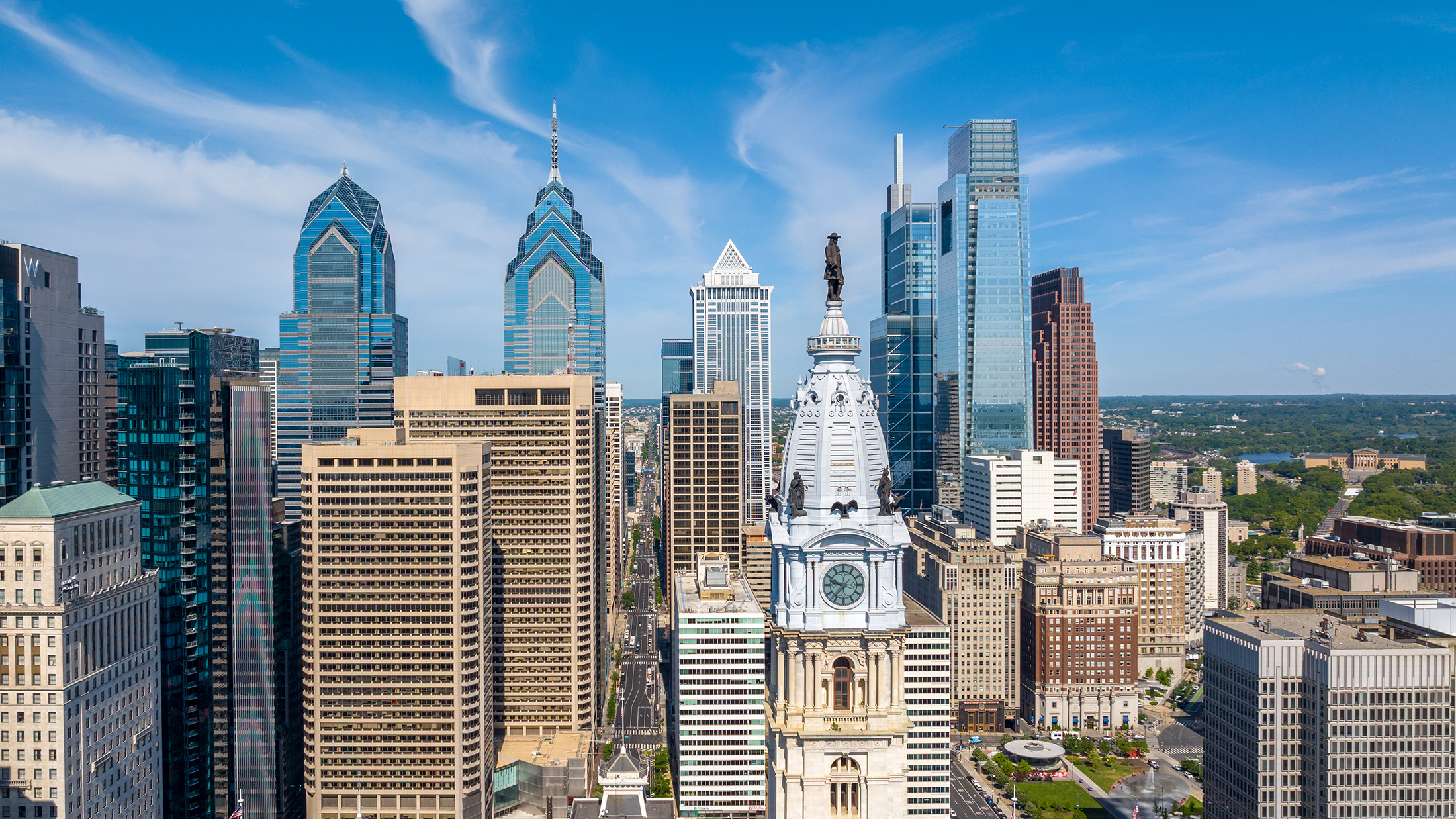
Walk five blocks along Frankford Avenue, South Street or Roosevelt Boulevard and you will pass a crypto kiosk humming away next to the lottery terminal. Philadelphia has the densest machine network in Pennsylvania by a wide margin — coverage across the greater metropolitan area runs into the hundreds, spread across bodegas, check-cashing storefronts, laundromats, gas stations and a handful of mall concourses.
Density is not the same as value. The city's kiosk market is dominated by machines charging a percentage fee stacked on an exchange-rate spread, and the combination routinely lands between 8% and 23% of the cash you feed in. On a $500 purchase that is between $40 and $115 gone before the coins reach your wallet.
This page maps where the machines actually cluster, tells you which corridors carry two-way units, explains how to read a machine's real price before you commit, and covers the fraud problem that has made Philadelphia kiosks a target. Our Philadelphia city guide covers the wider picture including banks, exchanges and tax.
Where the machines actually are
The first thing to understand about Philadelphia is that kiosks follow cash, not population and not wealth. Center City has surprisingly few machines because the office core is not a cash economy. The commercial corridors of the Northeast, West and South Philadelphia have many, because that is where cash still circulates daily.
That distribution is the business model working as designed. A crypto kiosk is profitable where customers value immediacy and cash acceptance over price, and where they are unlikely to compare alternatives. In practice that correlates with lower banking access — which is why the machines cluster where the fee hurts most.
Availability also is not reliability. A machine listed on any online map may be powered off, out of cash for sell transactions, or sitting inside a business that closed two years ago. Roughly a third of Philadelphia machines are buy-only. Before travelling anywhere, call the host business and ask two questions: is the machine powered on, and does it accept sells as well as buys.
Coverage by neighbourhood
Machine placement changes as operators rotate contracts with host businesses, so treat this as a map of where coverage concentrates rather than a list of addresses.
| Area | Density | Two-way | What to expect |
|---|---|---|---|
| Northeast Philadelphia | Very high | Some | Roosevelt Boulevard, Cottman, Castor and Frankford Avenues. The single densest cluster in Pennsylvania, overwhelmingly inside gas stations and 24-hour convenience stores. |
| Kensington & Port Richmond | High | Limited | Aramingo Avenue and Allegheny Avenue carry some of the oldest installations in the city. Several have changed operator two or three times — confirm who runs a machine before using it. |
| West Philadelphia | High | Better than average | Lancaster Avenue and the 52nd Street corridor, plus scattered units near University City. Proportionally more two-way machines here than elsewhere in the city. |
| South Philadelphia | Medium-high | Some | Passyunk, Snyder and Oregon Avenues, with additional units along Broad Street toward the sports complex. |
| Germantown & Olney | Medium | Limited | Germantown Avenue and Broad Street north of Erie Avenue, largely inside grocery and check-cashing storefronts. |
| Center City & Market East | Low | Rare | A handful of machines in convenience stores near the Fashion District and along Chestnut and Walnut. Best coverage for office workers, and consistently the worst pricing per machine. |
| Roxborough & Manayunk | Low | Rare | Ridge Avenue and Main Street. Thin coverage relative to population — this is an online-first part of the city. |
| Far Northeast | Medium | Some | Bustleton and Grant Avenues toward the Bucks County line, mostly larger gas stations with longer opening hours. |
Coverage surveyed August 2026. Confirm any specific machine with the host business before travelling.
A pattern worth noting: the corridors with the highest density are also, generally, the ones with the least price competition. Nobody comparison-shops a machine they walked past, so adding machines to a corridor captures more of the same traffic rather than pushing prices down. Our Upper Darby guide covers the same effect at the 69th Street terminal, which is the densest suburban cluster in the state.
Which operators run Philadelphia machines
Several national networks and a long tail of independents. The fee ranges below are indicative — individual machines vary, and the number that matters is the one the screen quotes before you confirm.
| Operator | Buy cost (typical) | Two-way? | Sell cost |
|---|---|---|---|
| Bitcoin Depot | ~$3 flat + high percentage; commonly ~10–20% all-in | Rare | Mostly buy-only machines |
| CoinFlip | Around $3 + ~7–9% depending on machine | Many machines | Roughly 4–5% |
| Athena Bitcoin | Commonly cited at 10–25% | Some machines | Around 5% |
| Coinme (Coinstar kiosks) | Around 4% transaction fee plus a spread; some locations quote a cash exchange fee near 16.5% | No | Not supported at Coinstar kiosks |
| Byte Federal | Typically low-to-mid teens all-in | Some machines | Available at two-way units |
| RockItCoin | Typically low-to-mid teens all-in | Some machines | Available at two-way units |
| GetCoins | Typically low-to-mid teens all-in | Few | Limited |
| Coinsource | Typically around 10–20% all-in | Some machines | Available at two-way units |
The category to avoid is the last one in our statewide table: independent single-machine operators, common in Philadelphia smoke shops and small convenience stores. They are consistently the most expensive in the city and the least likely to display a rate before you commit cash. If you cannot identify who operates a machine from its screen or casing, walk away — you will also have nobody to call if the transaction fails.
Our statewide fee comparison covers every operator in detail, including the regulatory action one national network has faced over undisclosed charges.
What a Philadelphia kiosk really costs
Kiosk pricing has two layers and operators advertise only one. The visible layer is the transaction fee — a percentage, often with a flat dollar amount attached. The invisible layer is the exchange rate the machine uses, deliberately set worse than the market price. Add both together and you have the number that matters.
Across Philadelphia that all-in figure typically lands between 8% and 23%. A large national network machine on Cottman Avenue quoted an all-in cost in the mid-teens. A small independent operator in a South Philly smoke shop was worse — north of 20%. The lowest we found anywhere in the city, at a supermarket kiosk, was still around 11% once the spread was included.
Compare that with the online route on the same day: under 1% all-in on a licensed exchange using an ACH deposit from a Philadelphia bank. On a $1,000 purchase that is roughly a $130 difference for exactly the same bitcoin.
Check the market price of bitcoin on your phone. Insert the smallest note the machine accepts — usually a $5 or $10. Read the quoted total. Divide what you would receive by what you inserted. If that ratio is worse than about 0.90, you are paying more than 10% and should think again. Cancel before confirming; every compliant machine allows it.
Two-way machines and selling for cash
Selling is where Philadelphia gets awkward. Machines that dispense cash are a minority of the installed base — roughly a third of city machines are buy-only — they cap daily withdrawals lower than they cap purchases, and they frequently run dry on a busy weekend.
Selling at a kiosk typically costs 4–5%, which is notably better than the 8–23% those same machines charge to buy. The constraint is availability rather than price.
Three questions to ask the host business before travelling: is the machine powered on, does it accept sell transactions, and roughly how much cash is in it. Store staff cannot help with transactions but they can look across the room.
For anything beyond a few hundred dollars, selling on a licensed exchange and withdrawing by ACH to a Philadelphia bank is faster, cheaper and far more reliable. Our Philadelphia selling guide covers the routes, timings and how local banks handle incoming crypto funds.
The same bitcoin at roughly one twentieth of the fee
An ACH-funded order on a platform holding a Pennsylvania Money Transmitter Licence (No. 112703), FinCEN MSB registration and NMLS ID 1804170 typically costs under 1% all-in. Verification takes under ten minutes with a PennDOT ID, and it works from anywhere in the city.
Safety and the fraud problem
Two separate risks, and the second is far larger than the first.
Physical safety
You are carrying cash to a machine, often in a commercial corridor, sometimes late. Go during daylight to a staffed location with visible cameras. Have your cash ready before you approach the machine rather than counting it there. A machine inside an occupied supermarket is meaningfully safer than one in an unstaffed vestibule.
The fraud problem
This is the part we would ask you to read even if you skip everything else. Pennsylvania ranked sixth nationally for internet crime complaints in the FBI's 2025 Internet Crime Report, with more than 31,000 complaints and over $537 million in reported losses. Nationally, crypto-kiosk fraud complaints to IC3 reached 13,460 in 2025 with $389 million in reported losses — a 58% increase year over year, with older Americans accounting for the majority of dollars lost.
The Philadelphia pattern is consistent. A phone call claims to be PECO threatening to cut power within the hour, or the Philadelphia Parking Authority, or a Social Security "fraud department", or the Sheriff's Office, or a grandchild in custody who needs bail. The caller stays on the line, directs the victim to a specific kiosk they have looked up on a public map, and talks them through scanning a QR code. That QR code is the scammer's wallet. Once the transaction confirms, there is no chargeback on a blockchain transfer.
No legitimate organisation will ever ask you to pay at a cryptocurrency machine. Not PECO. Not the IRS or the Social Security Administration. Not the PPA, the Philadelphia Sheriff's Office, the courts or any police department. Not your bank. Not a grandchild in trouble. If anyone on a phone is directing you to a machine, hang up and call a family member.
Three operational rules follow: never transact at a kiosk while on a phone call, never scan a QR code someone else provided, and treat urgency as automatic evidence of fraud. Report attempts to the Pennsylvania Attorney General's Bureau of Consumer Protection and to IC3. Our Pennsylvania scam guide lists the scripts currently circulating.
The cheaper routes for Philadelphia buyers
There is a genuine use case for kiosks — instant, cash-accepting, no bank account, twenty-four hours. If that describes your situation, they are a legitimate tool. But most Philadelphia kiosk users do have alternatives, so here they are in ascending order of cost.
- A bank or credit union account plus a licensed exchange
Under 1% all-in. Philadelphia has a deep credit union sector — American Heritage, Police & Fire FCU, TruMark and others — with many offering low-minimum accounts and second-chance products. This is the answer for the large majority of readers.
- A debit card purchase on a licensed exchange
Roughly 2–4%, instant. Sensible when you want coins today and the amount is modest.
- Supermarket cash-to-crypto kiosks
Coin-counting machines that now sell bitcoin at many Philadelphia supermarkets. Typically 5–16% — worse than a bank transfer, better than most standalone crypto machines, and in a staffed setting. See our supermarket kiosk guide.
- A standalone crypto kiosk
8–23% all-in. Fast, cash-friendly, no bank needed, and the most expensive route available in the city.
Put in annual terms: someone converting $150 a week through a Philadelphia kiosk at a 15% all-in rate pays roughly $1,170 a year in fees. The same volume through a credit union account and a licensed exchange costs under $80.
Philadelphia bitcoin ATM FAQ
How many bitcoin ATMs are in Philadelphia?
Coverage across Greater Philadelphia runs into the hundreds, the densest concentration in Pennsylvania. Counts move constantly as operators rotate host contracts. Separately, supermarket coin-counting kiosks that sell bitcoin add many more locations that are not standalone crypto machines.
Where is the nearest bitcoin ATM in Philadelphia?
It depends on your neighbourhood, but the heaviest clusters are along Roosevelt Boulevard, Cottman Avenue, Castor Avenue and Frankford Avenue in the Northeast; Lancaster Avenue and 52nd Street in West Philadelphia; and Passyunk, Snyder and Oregon Avenues in South Philadelphia. Always call the host store before travelling.
What do Philadelphia bitcoin ATMs charge?
Between roughly 8% and 23% all-in once the exchange-rate spread is counted alongside the advertised transaction fee. Large national networks sit in the lower half of that range; independent single-machine operators regularly exceed 20%. The cheapest we have found in the city still ran around 11%.
Can I sell bitcoin for cash in Philadelphia?
Only at two-way machines, which are roughly a third of the city's installed base. They carry lower daily caps than buy limits and frequently run out of banknotes. Call the host business first and ask three questions: is it powered on, does it accept sells, and roughly how much cash is in it.
Do Philadelphia crypto ATMs require ID?
Almost always. Operators run tiered verification — a mobile number for the smallest amounts, a government photo ID scan plus a live selfie for mid-range purchases, and SSN collection for larger transactions. Several major operators now require ID on every transaction regardless of size.
Are Philadelphia bitcoin ATMs legal?
Yes. Since 15 October 2024 the Pennsylvania Department of Banking and Securities expects businesses transmitting virtual currency for a fee to hold a Money Transmitter Licence, and federal law requires FinCEN MSB registration. Senate Bill 1015 would add kiosk-specific rules but has not been enacted.
A licensed alternative to the machine on the cornerPA Money Transmitter Licence 112703 · FinCEN-registered MSB · NMLS ID 1804170 — bank funding at a fraction of kiosk cost.
Get started