
Philadelphia · Selling & withdrawal
How to Sell Bitcoin and Cash Out in Philadelphia
Buying is easy everywhere. Getting dollars back out in Philadelphia means dealing with cash-empty machines, credit union fraud reviews and a state tax rule that punishes selling at the wrong time of year.
Our starting point for readers in Pennsylvania is a platform that actually holds the paperwork: a FinCEN-registered Money Services Business with a Pennsylvania Money Transmitter Licence (No. 112703) issued by the Department of Banking and Securities, plus licences across all 50 states and NMLS ID 1804170.
Reviewed & updated August 2026
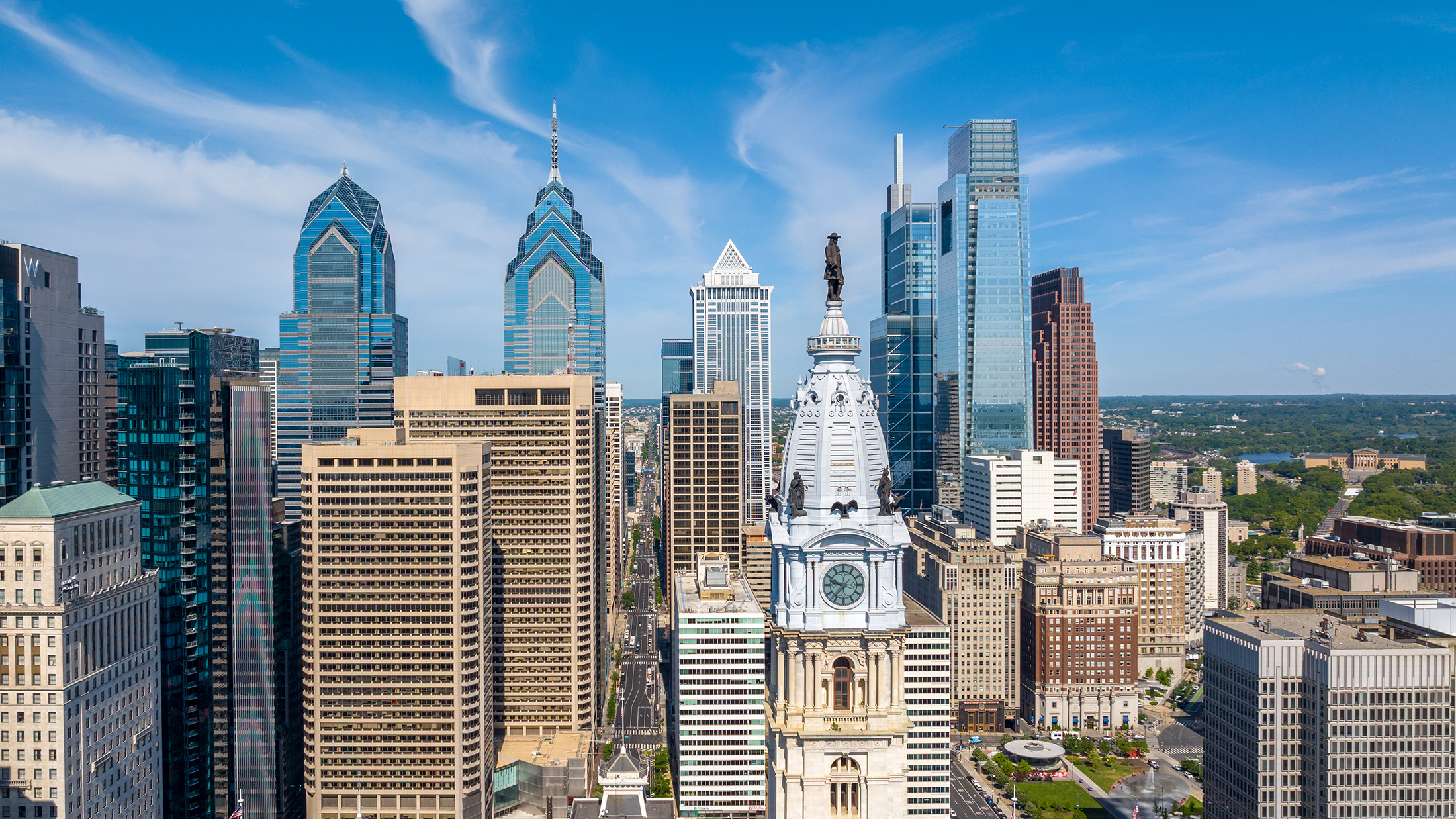
Philadelphia has the densest crypto kiosk network in Pennsylvania, which leads a lot of people to assume cashing out here is easy. It is not, or at least not in the way they expect — because the machines that take your cash and the machines that give it back are largely different machines.
Roughly a third of the city's installed base is buy-only. Of the two-way units that remain, daily payout caps are lower than purchase limits, and cash cassettes empty on busy weekends. Arriving at a machine on Frankford Avenue expecting $2,000 in twenties is a plan that fails often enough to be worth planning around.
This guide covers all four realistic exit routes for a Philadelphia seller, with honest costs and timings, how local banks actually behave when crypto proceeds land, and the Pennsylvania tax mechanics you should handle at the moment of sale rather than discovering in April.
Four ways to cash out in Philadelphia
| Route | Typical cost | Time to dollars | Best for |
|---|---|---|---|
| Exchange → ACH to bank | Under 1% | 1–3 business days | Almost everyone, almost always |
| Exchange → domestic wire | Fee + $10–$30 | Same business day | Above roughly $5,000 when speed matters |
| Two-way crypto kiosk | ~4–5% | Immediate cash | Small amounts when you specifically need banknotes |
| OTC desk | Quoted spread | Same or next day by wire | Block sales above roughly $50,000 |
Selling on an exchange and withdrawing to a Philadelphia bank
The default and the right answer for the overwhelming majority of sellers in the city. Sell your position on a licensed exchange, then withdraw dollars to your bank account.
Two mechanical details worth getting right. First, place a limit order rather than using the instant-sell widget — the gap between an order-book taker fee and a convenience spread runs one to three percent, which is the same trap that exists on the buy side, in reverse. Second, choose your withdrawal rail deliberately: ACH is free and takes one to three business days, while a domestic wire costs a flat $10 to $30 and lands the same business day. Above roughly $5,000 the wire is usually better economics.
A note on holds that catches Philadelphia sellers out. Many platforms restrict withdrawal of funds derived from a recent ACH deposit for a period, and some apply an additional hold after a security change such as a new password or a newly linked bank account. If you are selling against a deadline — a tax payment, a settlement date on a property — start the process well before you need the money.
Also confirm the platform holds a Pennsylvania Money Transmitter Licence. Since 15 October 2024 the Department of Banking and Securities expects virtual currency transmitters serving Commonwealth customers to be licensed — verify in NMLS Consumer Access.
How Philadelphia banks handle incoming crypto funds
No Pennsylvania financial institution is required to block or reject transfers from licensed crypto exchanges, and the banks operating across Philadelphia — Citizens, PNC, TD, Wells Fargo, Santander, M&T — process them routinely.
What does happen, particularly at the city's credit unions, is a manual fraud review on a first-time or unusually large incoming transfer. Philadelphia has a deep credit union sector — American Heritage, Police & Fire FCU, TruMark Financial and others — and conservative fraud controls are common across it.
Treat that as a protection rather than an obstruction. Bank staff in Pennsylvania have interrupted genuine fraud in progress more than once. Have your exchange statement available showing the source of funds, and if you can explain what you sold and when — and your answer does not involve anyone who telephoned you — the conversation takes two minutes. Deflecting is what turns a two-minute call into a multi-day hold.
A tip that avoids the issue entirely on a large sale: make a small test withdrawal of $50 to $100 first to establish the pattern between the platform and your account, then move the real amount.
Two-way machines across the city
Philadelphia has hundreds of crypto kiosks and a minority of them dispense cash. Where they exist, selling typically costs 4–5% — notably better than the 8–23% those same machines charge to buy.
Distribution is uneven. West Philadelphia, along Lancaster Avenue and the 52nd Street corridor, carries proportionally more two-way units than the rest of the city. South Philadelphia along Passyunk, Snyder and Oregon Avenues has some. Northeast Philadelphia has the highest raw density of machines but a large share are buy-only. Center City two-way units are rare.
Three constraints apply everywhere. Daily sell caps are lower than buy caps — a machine that will take $10,000 of cash may only pay out $2,000. Machines run out of banknotes, which is the most common failure and is worst on Sunday evenings. And the process is slower than buying: you send crypto first and wait for network confirmation before the machine dispenses, which can mean several minutes standing in a convenience store with cash about to appear.
Always call the host business before travelling. Our Philadelphia bitcoin ATM page breaks the network down by neighbourhood, including which corridors carry two-way coverage.
Sell where the withdrawal rails actually work
A platform holding a Pennsylvania Money Transmitter Licence (No. 112703), FinCEN MSB registration and NMLS ID 1804170 — ACH and wire withdrawals to any Philadelphia bank, with exportable records for tax time.
Larger positions and OTC desks
A market sell order for $500 fills instantly at the price you saw. A market sell order for $500,000 does not — it walks down the order book taking progressively worse prices, and the average execution can land meaningfully below the quoted price. That effect is slippage.
Above roughly $50,000 for major assets, an OTC desk becomes worth considering. A desk quotes a single price for the entire block, holds it briefly, and settles by wire once you accept. You avoid order-book slippage and you avoid signalling a large order to the market.
One Philadelphia-specific point worth stating plainly: there is no significant physical OTC storefront presence in the city. Desks serving Philadelphia clients operate remotely, with onboarding by video call and settlement by domestic wire. Anyone offering to meet you in person in Philadelphia to exchange a large amount of cryptocurrency for cash should be declined — that is a robbery and money-laundering risk profile, not a brokerage.
Desk onboarding involves full KYC and source-of-funds documentation and takes a few business days. Establish the relationship before you need it. Our Pennsylvania OTC guide covers minimums, settlement mechanics and what to ask a desk before committing.
Peer-to-peer, and why we advise against it
Selling directly to another individual for cash is legal in Pennsylvania and it is the route we would steer almost every Philadelphia reader away from.
The risks are concrete. Meeting a stranger with a meaningful amount of cash carries obvious physical danger, and there is a documented national history of robberies at arranged crypto meetups. Counterfeit currency is a real exposure when accepting notes without a counting machine. And payment reversal fraud is common on the digital side — a buyer sends payment through a reversible method, receives the crypto, then reverses the payment.
There is also a regulatory dimension people underestimate. Someone who buys and sells cryptocurrency for others as a business, rather than trading their own holdings, may be operating as an unlicensed money transmitter. Federal prosecutions of unlicensed peer-to-peer crypto sellers have happened, and since October 2024 Pennsylvania expects a state licence for that activity as well. Casual occasional sales of your own holdings are a different matter, but the line is closer than people assume.
If you genuinely need physical cash rather than a bank deposit, a two-way kiosk at 4–5% is a far better trade than the risks above.
Tax at the moment of sale
Pennsylvania applies a flat 3.07% personal income tax to the net gain, with federal capital gains tax on top. There is no Pennsylvania withholding at the point of sale — you report and pay when you file, which means the money sits in your account looking entirely spendable until April.
Set the reserve aside on the day the proceeds land. A common approach is moving an estimated tax amount into a separate account immediately. Federal rates depend on your holding period and income; Pennsylvania's 3.07% does not vary.
Philadelphia wage tax does not apply. The city wage tax is levied on compensation, not investment gains, so a profit on a bitcoin sale is outside it. The exception is being paid in cryptocurrency for work performed in Philadelphia — that is compensation, valued in dollars at receipt, and wage tax applies.
Pennsylvania does not permit capital loss carryforward. A loss exceeding your gains in the same tax year is permanently lost for state purposes, unlike federally where it carries forward indefinitely. If you hold both winning and losing positions, realising them in the same calendar year is materially better than splitting them across December and January.
Record six things at the moment of every disposal: date, asset, quantity, dollar proceeds, original cost basis and fees paid. Our Pennsylvania crypto tax guide works through the arithmetic with examples.
Selling bitcoin in Philadelphia — FAQ
How do I sell bitcoin in Philadelphia?
Sell on a licensed exchange to US dollars, then withdraw by ACH to your Philadelphia bank account — one to three business days at a cost typically under 1%. A domestic wire settles the same business day for a flat fee, which makes sense above roughly $5,000. Two-way crypto kiosks pay physical cash but cost 4–5% with low daily caps.
Where can I sell bitcoin for cash in Philadelphia?
Only at two-way machines, which are roughly a third of the city's installed base. West Philadelphia along Lancaster Avenue and 52nd Street has proportionally more than other areas. Call the host store first and ask whether the machine is powered on, accepts sells, and roughly how much cash it holds.
How long does an ACH withdrawal take to a Philadelphia bank?
One to three business days is typical with Citizens, PNC, TD, Wells Fargo, Santander and the local credit unions. A first sale may take longer if the platform holds funds derived from a recent deposit or after a security change. Start early if you have a deadline.
Will my Philadelphia bank question a large crypto deposit?
Possibly, particularly at credit unions with conservative fraud controls. That is protective rather than obstructive. Have your exchange statement available showing the source of funds; the conversation usually takes two minutes. No Pennsylvania institution is required to block these transfers.
What tax do I owe on a bitcoin sale in Philadelphia?
Pennsylvania's flat 3.07% personal income tax on the net gain, plus federal capital gains tax. Philadelphia's wage tax applies to compensation, not investment gains, so it does not apply. Pennsylvania does not permit capital loss carryforward — see our tax guide.
Is there Philadelphia city tax on crypto profits?
No. The Philadelphia wage tax applies to compensation. A profit on a bitcoin sale is an investment gain and is not subject to it. If you are paid in cryptocurrency for work performed in Philadelphia, that is compensation and wage tax does apply.
Set up your exit before you need itVerified account, linked Philadelphia bank, tested withdrawal — PA MTL 112703, FinCEN-registered MSB, NMLS ID 1804170.
Get started