
Allegheny County · Western Pennsylvania
How to Buy Crypto in Pittsburgh, Pennsylvania
Pittsburgh has the strongest technical talent pool in Pennsylvania and one of the state's thinner kiosk networks. That combination shapes how buying crypto here actually works — and it favours the online route more than most PA cities.
Our starting point for readers in Pennsylvania is a platform that actually holds the paperwork: a FinCEN-registered Money Services Business with a Pennsylvania Money Transmitter Licence (No. 112703) issued by the Department of Banking and Securities, plus licences across all 50 states and NMLS ID 1804170.
Reviewed & updated August 2026
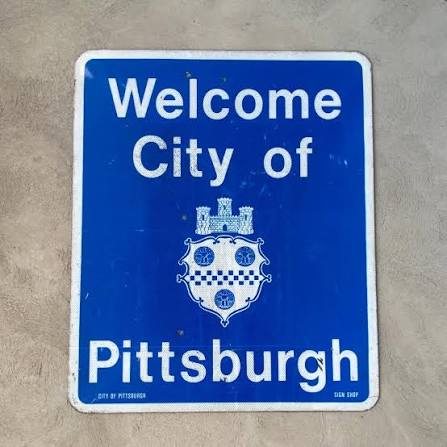
Pittsburgh does not behave like the rest of Pennsylvania when it comes to crypto. Carnegie Mellon and the University of Pittsburgh produce a steady flow of cryptography, distributed systems and machine-learning graduates, and a meaningful number of them stay. The result is a city where the average person asking about digital assets is more likely to want a hardware wallet and a self-custody setup than a cash kiosk in a gas station.
The kiosk network reflects that. Greater Pittsburgh carries a solid but unspectacular number of machines relative to its population, concentrated in the neighbourhoods where cash businesses cluster rather than downtown. If you are in Squirrel Hill or Shadyside expecting a machine on every corner, you will be disappointed. If you are on the East Busway corridor or in McKees Rocks, you will find several.
This page covers the practical mechanics for a Pittsburgh buyer: which platforms are licensed to serve you, how funding works through local banks like Dollar Bank and PNC (which is headquartered here), where the kiosks actually are, what they cost, and how the tax and regulatory picture applies west of the Alleghenies.
- Why the online route dominates in Pittsburgh
- Where Pittsburgh's crypto kiosks sit
- Sheetz, gas stations and the Western PA retail angle
- Cashing out in Pittsburgh
- Pittsburgh's blockchain and crypto employment scene
- Fraud patterns in Allegheny County
- Kiosk locations by area
- Exchanges serving Pittsburgh
- Frequently asked questions
Why the online route dominates in Pittsburgh
PNC Financial Services is headquartered in downtown Pittsburgh, and Dollar Bank, First National Bank and Citizens all have deep local branch networks. Bank penetration in Allegheny County is high, and ACH transfers from those institutions to a licensed exchange settle without drama. That removes the main reason people use cash kiosks elsewhere — no bank account.
The cost gap is not subtle. A licensed exchange funded by ACH will typically cost you well under 1% all-in. The cheapest Pittsburgh kiosk we found still ran double digits once the exchange-rate spread was counted. On a $1,000 purchase that is the difference between roughly $8 and roughly $130.
Where kiosks still make sense in Pittsburgh: you need coins in the next ten minutes, you are paying in physical cash, or you do not have a bank account. Those are legitimate cases. They are just narrower than the machine density suggests.
Where Pittsburgh's crypto kiosks sit
Downtown Pittsburgh and the Golden Triangle have relatively few machines — the office core is not a cash economy. The concentration is in the neighbourhood commercial strips and the inner suburbs.
The East End carries machines along Penn Avenue through Garfield and East Liberty, and around Baum Boulevard. The South Side has installations along East Carson Street, mostly inside convenience stores that stay open late. Across the rivers, the North Side has units near East Ohio Street, and the Route 51 corridor through Brentwood and Whitehall carries several gas-station machines. West of the city, McKees Rocks, Carnegie and the Robinson Township retail corridor all have coverage.
Further out in Allegheny County, Monroeville, Penn Hills, West Mifflin and Bethel Park each have a handful, typically inside larger gas stations or supermarkets. Beaver County and Washington County add more along the main highway corridors. Our Pittsburgh bitcoin ATM page breaks the network down by neighbourhood in more detail.
Skip the kiosk fees in Pittsburgh
A platform holding a Pennsylvania Money Transmitter Licence (No. 112703) and FinCEN MSB registration lets you fund by bank transfer and pay a fraction of what a cash machine charges. Verification takes under ten minutes with a PennDOT ID.
Sheetz, gas stations and the Western PA retail angle
Western Pennsylvania is Sheetz country — the Altoona-based chain dominates west of the Susquehanna the way Wawa dominates the southeast. Sheetz has an actual history here: in 2019 the chain piloted bitcoin ATMs at six stores in partnership with an operator, with locations including Pittsburgh, Altoona, Chambersburg, Harrisburg and State College. That pilot made Sheetz one of the earliest large US convenience chains to put a crypto kiosk on the floor.
The broader pattern holds today: gas stations and convenience stores are the single most common host category for crypto kiosks in Western Pennsylvania, well ahead of standalone retail. The economics suit both parties — the store gets rent for two square feet of floor, the operator gets 24-hour access and foot traffic that already handles cash.
Worth knowing: a kiosk inside a national-brand store is not operated by that brand, and the store staff cannot help you with a failed transaction, a wrong wallet address or a refund. Every dispute goes to the kiosk operator's support line, which is printed on the machine.
Cashing out in Pittsburgh
Two-way machines that dispense cash are scarcer in Pittsburgh than in Philadelphia. If your goal is physical dollars, plan on calling ahead and expect a daily cap in the low thousands.
The standard route is to sell on a licensed exchange and withdraw by ACH to a Pittsburgh bank. PNC, Dollar Bank, First National and the larger local credit unions all handle these transfers routinely. One to three business days is typical; a same-day wire is available for a flat fee if the amount justifies it.
For sales in the tens of thousands, an OTC desk gives you a single quoted price for the whole block instead of eating slippage across an order book. Most desks that serve Western Pennsylvania operate remotely with wire settlement rather than from a physical Pittsburgh office — our OTC guide explains the minimums and the settlement mechanics.
Crypto kiosk locations in Pittsburgh by area
Machine placement changes as operators rotate contracts with host businesses, so treat this as a map of where coverage concentrates rather than a list of specific addresses. Call the host store before travelling — confirm the machine is powered on, whether it accepts sell transactions, and what hours the store keeps.
| Area / corridor | What to expect |
|---|---|
| East Liberty & Garfield | Penn Avenue and Baum Boulevard corridor — the densest East End cluster, mostly convenience stores. |
| South Side (East Carson St) | Late-opening convenience stores along Carson serve the nightlife corridor; several machines here run 24 hours. |
| Route 51 / Brentwood & Whitehall | Gas-station installations along the Route 51 commercial strip heading south from the city. |
| McKees Rocks & Carnegie | Older west-side installs in neighbourhood grocery and check-cashing storefronts. |
| Monroeville & Penn Hills | Suburban coverage around the William Penn Highway retail corridor and the Monroeville Mall area. |
| Robinson Township | Machines around the Settlers Ridge and Robinson retail cluster near the airport corridor. |
Coverage surveyed August 2026. Roughly a third of Pennsylvania machines are buy-only, and two-way units frequently run out of banknotes. See the Pennsylvania bitcoin ATM guide for how the machines work and what identity checks apply at each transaction tier.
Pittsburgh's blockchain and crypto employment scene
Pittsburgh's crypto-relevant employment is mostly embedded rather than pure-play. Carnegie Mellon's CyLab does serious applied cryptography research, and the university's Software Engineering Institute works on the security side. On the commercial side, the local roles that touch distributed ledgers tend to sit inside larger employers — financial services engineering at PNC, security engineering at the regional insurers, and the substantial robotics and AI cluster in Lawrenceville and the Strip District that occasionally spins up ledger-adjacent projects.
That matters if you are searching for "crypto jobs Pittsburgh". The realistic path is a backend, security or data engineering role at an established employer that happens to have blockchain exposure, rather than a job at a crypto startup — there are far fewer of the latter here than the search volume suggests. We break the market down in the Pennsylvania crypto jobs guide.
The city also has a durable meetup culture. Pittsburgh Blockchain and the CMU student groups have hosted the more technically substantial sessions; if you want to learn rather than be sold to, those are the better rooms.
Fraud patterns in Allegheny County
The Allegheny County scam profile mirrors the statewide one, with a local accent. Duquesne Light impersonation calls are the utility variant here, alongside the standard Social Security, IRS, "arrest warrant" and grandparent scripts. Victims are directed to a specific kiosk — often one the caller has looked up on a public map — and coached through the QR-code step while still on the phone.
Nationally, crypto-kiosk fraud complaints to the FBI's IC3 reached 13,460 in 2025 with $389 million in reported losses, a 58% jump year over year. Older Americans accounted for the majority of the dollar losses. Pennsylvania is squarely in that data.
Practical defences: never transact at a kiosk while on a phone call, never scan a QR code someone else sent you, and treat any urgency framing as automatic proof of fraud. Allegheny County residents can report to the PA Attorney General and to IC3. More detail in our scam prevention guide.
Exchanges that serve Pittsburgh residents
Every platform below is available to Pennsylvania residents. What separates them for a Pittsburgh buyer is funding method, fee structure and licensing — and the first of those three usually matters most. Our full write-ups are in the Pennsylvania exchange comparison.
| Platform | Best for | Typical trading fee | Funding methods | Min buy |
|---|---|---|---|---|
| CEX.IO | Licensed cash-in with full PA coverage | Spot from ~0.25%; card buys higher | Card, ACH, domestic wire, balance | ~$20 |
| Coinbase | First-time buyers who want a name they recognise | Advanced 0.00–0.60%; simple buys higher | ACH, debit card, wire, PayPal, balance | $2 |
| Kraken | Low-cost spot trading and staking | Pro maker ~0.25% / taker ~0.40% | ACH, wire, debit card, balance | ~$10 |
| Gemini | Custody-conscious buyers and estate planning | ActiveTrader ~0.20% / 0.40% | ACH, wire, debit card, balance | $1 |
| Crypto.com | Mobile-first users who also want a spend card | Exchange from ~0.075%; app spread ~0.5%+ | ACH, debit/credit card, wire, balance | ~$1 |
| Bitstamp | Straightforward spot buying with no gimmicks | From ~0.30% / 0.40% | ACH, wire, card, balance | ~$25 |
Fee schedules verified August 2026 and subject to change without notice. Always confirm the live schedule on the operator’s own site before trading.
One filter worth applying before anything else: check that the platform holds a Pennsylvania Money Transmitter Licence. Since 15 October 2024, the Department of Banking and Securities expects virtual-currency transmitters serving Pennsylvania customers to be licensed. You can verify any company yourself in NMLS Consumer Access and the FinCEN MSB registrant search.
Pittsburgh crypto FAQ
Where can I buy bitcoin with cash in Pittsburgh?
At a two-way or buy-only crypto kiosk. Greater Pittsburgh has well over a hundred, concentrated along Penn Avenue in the East End, East Carson Street on the South Side, the Route 51 corridor, and suburban gas stations in Monroeville, Robinson and West Mifflin. Expect an all-in cost in the low-to-high teens as a percentage, and bring photo ID.
Are there any crypto exchanges based in Pittsburgh?
No major retail exchange is headquartered in Pittsburgh. Residents use nationally licensed platforms, all of which serve Pennsylvania. What Pittsburgh does have is a genuine concentration of blockchain research and engineering talent at Carnegie Mellon and Pitt, plus fintech engineering inside PNC.
Which banks in Pittsburgh work well with crypto exchanges?
PNC, Dollar Bank, First National Bank and Citizens all process ACH transfers to licensed exchanges without unusual friction. Some smaller credit unions apply a manual review to a first-time crypto-related transfer; a call to your branch clears it. No Pennsylvania bank is required to block these transfers.
Can I sell bitcoin for cash in Pittsburgh?
At two-way machines only, and they are less common here than in Philadelphia. Daily cash-out caps are typically lower than buy limits, and machines run out of banknotes. For anything above a few hundred dollars, sell on an exchange and withdraw by ACH — see the Pennsylvania selling guide.
Do I owe Pittsburgh city tax on crypto profits?
Pittsburgh's earned income tax applies to wages, not to investment gains, so a profit on a bitcoin sale is not subject to it. You will owe Pennsylvania's flat 3.07% personal income tax on the net gain plus federal capital gains tax. If you are paid in crypto for work performed, that is compensation and local earned income tax does apply.
Ready to buy in Pittsburgh?Open an account with a licensed, FinCEN-registered platform holding Pennsylvania MTL 112703 — bank funding, transparent fees, verification in minutes.
Get startedKeep reading
More Pennsylvania crypto guides
Everything a Pittsburgh reader tends to look at next.