
Philadelphia County · Southeastern Pennsylvania
Where and How to Buy Crypto in Philadelphia
Philadelphia has more crypto kiosks than any other city in the Commonwealth — and some of the worst pricing in the state hiding inside them. Here is what a Philly buyer actually pays, and the cheaper route most people miss.
Our starting point for readers in Pennsylvania is a platform that actually holds the paperwork: a FinCEN-registered Money Services Business with a Pennsylvania Money Transmitter Licence (No. 112703) issued by the Department of Banking and Securities, plus licences across all 50 states and NMLS ID 1804170.
Reviewed & updated August 2026
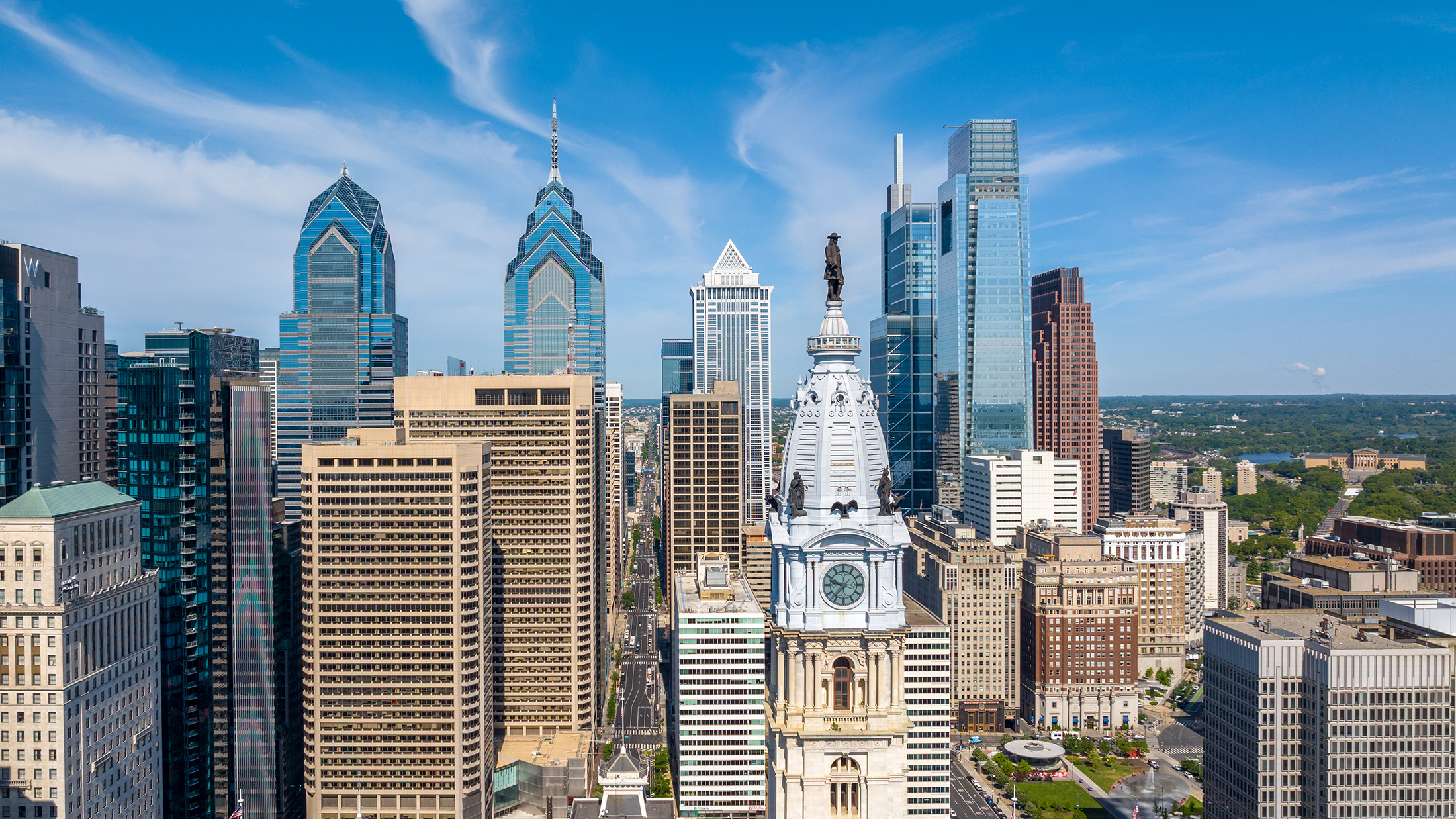
Philadelphia is the busiest crypto market in Pennsylvania by a wide margin, and it shows in the streetscape. Walk five blocks along Frankford Avenue, South Street or Broad Street and you will pass a bitcoin kiosk humming away next to the lottery terminal in a corner store. The density is real: coverage across Greater Philadelphia runs into the hundreds of machines, spread across bodegas, check-cashing storefronts, laundromats, gas stations and a handful of mall concourses.
What that density does not mean is that Philadelphia is a cheap place to buy crypto. The city's kiosk market is dominated by machines that charge a percentage fee stacked on top of an exchange-rate spread, and the combination routinely lands somewhere between 8% and 23% of the cash you feed in. On a $500 purchase, that is between $40 and $115 gone before the coins even reach your wallet. There is a real use case for that convenience — instant, cash-in, no bank account required — but it should be a deliberate choice, not an accident.
This guide covers both routes. First, the fast and inexpensive one: opening an account with a platform that actually holds a Pennsylvania Money Transmitter Licence, funding it by ACH from a Philadelphia bank or credit union, and paying well under one percent. Second, the cash route: which neighbourhoods have working machines, what the operators charge, which ID they will ask for, and how to avoid the specific scam patterns that have made Philadelphia a target.
- The fastest legitimate route for a Philadelphia buyer
- Where Philadelphia's crypto kiosks actually are
- What a Philadelphia kiosk really costs
- Selling and cashing out in Philadelphia
- Philadelphia's crypto and fintech scene
- Scams that specifically target Philadelphia kiosk users
- Kiosk locations by area
- Exchanges serving Philadelphia
- Frequently asked questions
The fastest legitimate route for a Philadelphia buyer
If you have a bank account and a Pennsylvania driver's licence, the whole thing takes about fifteen minutes. Open an account with a platform that is licensed to serve Pennsylvania residents, complete identity verification, link your bank, and place an order. Verification is the step people dread, and it is genuinely painless now — a photo of the front and back of your ID and a short selfie video, usually cleared while you are still on the page.
The part worth slowing down for is the funding method. A debit or credit card gives you coins in seconds and costs a convenience premium of a few percent. An ACH transfer from a Philadelphia bank — Citizens, PNC, TD, Wells Fargo, or a credit union like American Heritage or Police & Fire FCU — is effectively free but takes one to three business days to settle. A domestic wire lands the same day for a flat fee, usually $10 to $30, and only makes sense above roughly $5,000 where the flat fee is smaller than the percentage alternatives.
One Philadelphia-specific wrinkle: a number of local credit unions still flag crypto-related ACH transfers for manual review on first use. If your transfer sits in "pending" for longer than the stated window, a two-minute phone call to your branch usually clears it. It is friction, not a block.
Where Philadelphia's crypto kiosks actually are
Machines cluster where cash still circulates, which in Philadelphia means the commercial corridors rather than the office towers. Center City has a handful, mostly in convenience stores around Market East and along Chestnut, but the real density sits north and east.
The Northeast is the single heaviest concentration in the city — Roosevelt Boulevard, Frankford Avenue, Castor Avenue and Cottman Avenue all carry multiple machines within a mile of each other, typically inside gas stations and 24-hour convenience stores. West Philadelphia clusters around Lancaster Avenue and 52nd Street. South Philly runs along Passyunk, Snyder and Oregon Avenues. Kensington and Port Richmond have some of the oldest installations in the city, several of which have changed operator two or three times.
Availability is not the same as reliability. A machine listed online may be switched off, out of cash for sell transactions, or sitting inside a store that closed two years ago. Before driving anywhere, call the host business and ask two questions: is the machine powered on, and does it accept sells as well as buys. Perhaps a third of Philadelphia machines are buy-only.
Skip the kiosk fees in Philadelphia
A platform holding a Pennsylvania Money Transmitter Licence (No. 112703) and FinCEN MSB registration lets you fund by bank transfer and pay a fraction of what a cash machine charges. Verification takes under ten minutes with a PennDOT ID.
What a Philadelphia kiosk really costs
Kiosk pricing has two layers and operators only advertise one. The visible layer is the transaction fee — a percentage, sometimes with a flat dollar amount on top. The invisible layer is the exchange rate the machine uses, which is deliberately worse than the market price. Add the two together and you have the number that matters.
We ran the arithmetic on the same $300 cash purchase across the operator types you find in Philadelphia. A large national network machine on Cottman Avenue quoted an all-in cost in the mid-teens as a percentage. A small independent operator in a South Philly smoke shop was worse — north of 20%. The lowest we found anywhere in the city, at a supermarket kiosk, was still around 11% once the spread was included.
Compare that with the online route on the same day: under 1% all-in on a licensed exchange using an ACH deposit. That is the entire argument. Our full breakdown of the operator-by-operator numbers is in the Pennsylvania crypto ATM fee comparison.
Selling and cashing out in Philadelphia
Selling is where Philadelphia gets awkward. Two-way machines that dispense cash are a minority of the installed base, they cap daily withdrawals lower than they cap purchases, and they frequently run dry on a busy weekend. If you want physical dollars for coins, call ahead — every time.
The route almost everyone actually uses is a licensed exchange: sell to USD on the platform, then withdraw by ACH to your Philadelphia bank account. Settlement usually takes one to three business days, or same-day by wire if you are moving a larger sum and are willing to pay the flat fee. There is no Pennsylvania-specific tax withholding on the sale — the state simply taxes the gain at its flat personal income rate, which we cover in the Pennsylvania crypto tax guide.
For amounts above roughly $50,000, neither route is ideal. That is OTC territory: a broker quotes you a single price for the whole block and settles by wire, so you avoid slippage and the transaction never touches a public order book. See our Pennsylvania OTC guide for how those desks work and what they charge.
Crypto kiosk locations in Philadelphia by area
Machine placement changes as operators rotate contracts with host businesses, so treat this as a map of where coverage concentrates rather than a list of specific addresses. Call the host store before travelling — confirm the machine is powered on, whether it accepts sell transactions, and what hours the store keeps.
| Area / corridor | What to expect |
|---|---|
| Northeast Philadelphia | Roosevelt Blvd, Cottman Ave, Castor Ave and Frankford Ave — the densest cluster in the city, mostly gas stations and 24-hour convenience stores. |
| Center City & Market East | A handful of machines in convenience stores near the Gallery/Fashion District and along Chestnut and Walnut. Best coverage for office workers, worst pricing per machine. |
| West Philadelphia | Lancaster Avenue and the 52nd Street corridor, plus scattered installs near University City. Several two-way machines here. |
| South Philadelphia | Passyunk, Snyder and Oregon Avenues, with additional units around the sports complex on Broad Street. |
| Kensington & Port Richmond | Some of the oldest installations in the city along Aramingo and Allegheny Avenues. Check operating status before travelling. |
| Germantown & Olney | Germantown Avenue and Broad Street north of Erie, largely inside grocery and check-cashing storefronts. |
Coverage surveyed August 2026. Roughly a third of Pennsylvania machines are buy-only, and two-way units frequently run out of banknotes. See the Pennsylvania bitcoin ATM guide for how the machines work and what identity checks apply at each transaction tier.
Philadelphia's crypto and fintech scene
Philadelphia's relationship with digital assets is quieter than New York's and more institutional than most people assume. The city's financial infrastructure is old and deep — Philadelphia hosted the first US stock exchange, and the Federal Reserve Bank of Philadelphia has published research on retail payment behaviour and stablecoins that is worth reading if you want a non-hype view.
On the private side, the University City and Navy Yard corridors host the fintech and payments employers that generate most of the region's blockchain-adjacent hiring. Comcast's technology arm, several large insurers, and a cluster of payments companies around Wayne and Radnor account for far more crypto-relevant jobs than any pure-play crypto startup in the city. Our Pennsylvania crypto jobs guide goes into where those roles actually sit.
Meetups come and go, but the Penn Blockchain group at the University of Pennsylvania has been the most durable public-facing community in the city and runs an annual conference that draws genuine industry names rather than only promoters.
Scams that specifically target Philadelphia kiosk users
This is the section we would ask you to read even if you skip everything else. Pennsylvania ranked sixth nationally for internet crime complaints in the FBI's 2025 Internet Crime Report, with more than 31,000 complaints and over $537 million in reported losses. A disproportionate share of the crypto-kiosk losses in the Commonwealth involve victims aged 60 and over — the Pennsylvania Office of Attorney General's Bureau of Consumer Protection reported that 85% of the crypto complaints it received came from that age group.
The Philadelphia pattern is consistent. A phone call claims to be PECO threatening to cut power within the hour, or the Philadelphia Parking Authority, or a Social Security "fraud department", or a grandchild in custody who needs bail. The caller stays on the line, directs the victim to a specific kiosk, and talks them through scanning a QR code. That QR code is the scammer's wallet. Once the transaction confirms, the money is gone — there is no chargeback on a blockchain transfer.
The rule is simple and absolute: no legitimate government agency, utility, bank, court or employer will ever ask you to pay at a crypto kiosk. Not PECO, not the IRS, not the PPA, not the Philadelphia Sheriff's Office. If someone on the phone is directing you to a machine, hang up and call the organisation back on a number you looked up yourself. Report attempts to the Pennsylvania Attorney General's Bureau of Consumer Protection and to IC3. Full detail is in our Pennsylvania crypto scam guide.
Exchanges that serve Philadelphia residents
Every platform below is available to Pennsylvania residents. What separates them for a Philadelphia buyer is funding method, fee structure and licensing — and the first of those three usually matters most. Our full write-ups are in the Pennsylvania exchange comparison.
| Platform | Best for | Typical trading fee | Funding methods | Min buy |
|---|---|---|---|---|
| CEX.IO | Licensed cash-in with full PA coverage | Spot from ~0.25%; card buys higher | Card, ACH, domestic wire, balance | ~$20 |
| Coinbase | First-time buyers who want a name they recognise | Advanced 0.00–0.60%; simple buys higher | ACH, debit card, wire, PayPal, balance | $2 |
| Kraken | Low-cost spot trading and staking | Pro maker ~0.25% / taker ~0.40% | ACH, wire, debit card, balance | ~$10 |
| Gemini | Custody-conscious buyers and estate planning | ActiveTrader ~0.20% / 0.40% | ACH, wire, debit card, balance | $1 |
| Crypto.com | Mobile-first users who also want a spend card | Exchange from ~0.075%; app spread ~0.5%+ | ACH, debit/credit card, wire, balance | ~$1 |
| Bitstamp | Straightforward spot buying with no gimmicks | From ~0.30% / 0.40% | ACH, wire, card, balance | ~$25 |
Fee schedules verified August 2026 and subject to change without notice. Always confirm the live schedule on the operator’s own site before trading.
One filter worth applying before anything else: check that the platform holds a Pennsylvania Money Transmitter Licence. Since 15 October 2024, the Department of Banking and Securities expects virtual-currency transmitters serving Pennsylvania customers to be licensed. You can verify any company yourself in NMLS Consumer Access and the FinCEN MSB registrant search.
Philadelphia crypto FAQ
Is buying crypto legal in Philadelphia?
Yes. There is no city ordinance restricting the purchase of cryptocurrency in Philadelphia, and Pennsylvania law does not prohibit residents from buying or holding digital assets. What is regulated is the business side: since 15 October 2024, companies transmitting virtual currency for Pennsylvania customers are expected to hold a Money Transmitter Licence from the Department of Banking and Securities. That obligation sits with the platform, not with you as a buyer.
What is the cheapest way to buy bitcoin in Philadelphia?
An ACH-funded order on a licensed online exchange, placed on the order book rather than through a one-click "buy" widget. All-in cost is typically under 1%. The most expensive common route is a cash kiosk, where 8–23% all-in is normal. Card purchases sit in between at roughly 2–4%.
Do Philadelphia bitcoin ATMs require ID?
Almost always, yes. Operators run tiered KYC: the smallest transactions may only need a mobile number, mid-tier purchases require a government photo ID scan and a live selfie, and larger amounts trigger SSN collection and sometimes manual pre-approval. Any machine offering unlimited anonymous purchases is not operating within federal MSB rules and should be avoided.
Can I sell bitcoin for cash in Philadelphia?
Only at two-way machines, which are a minority of the city's installed base and often have lower daily limits and cash shortages. Call the host business first. For anything beyond a few hundred dollars, selling on an exchange and withdrawing by ACH to your bank is faster, cheaper and far more reliable — see our selling guide.
How much tax will I pay on crypto gains in Philadelphia?
Pennsylvania applies a flat 3.07% personal income tax to net gains, and federal capital gains rules apply on top. Philadelphia's own wage tax does not apply to investment gains. Note that Pennsylvania does not allow you to carry a capital loss forward to a future year, which changes how you should time realisations — details in the PA crypto tax guide.
Ready to buy in Philadelphia?Open an account with a licensed, FinCEN-registered platform holding Pennsylvania MTL 112703 — bank funding, transparent fees, verification in minutes.
Get startedKeep reading
More Pennsylvania crypto guides
Everything a Philadelphia reader tends to look at next.