
Pennsylvania · Fee analysis
Crypto ATM Fees in Pennsylvania: What You Really Pay
Every crypto kiosk in Pennsylvania charges twice — once visibly and once through the exchange rate. This page puts both numbers together for the operators actually working in the Commonwealth.
Our starting point for readers in Pennsylvania is a platform that actually holds the paperwork: a FinCEN-registered Money Services Business with a Pennsylvania Money Transmitter Licence (No. 112703) issued by the Department of Banking and Securities, plus licences across all 50 states and NMLS ID 1804170.
Reviewed & updated August 2026
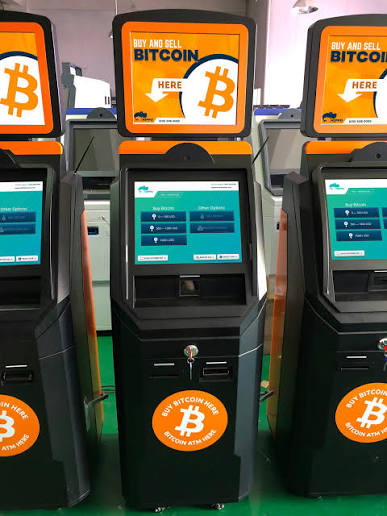
Ask most people what a bitcoin ATM charges and they will quote you the number on the screen — nine percent, twelve percent, whatever the machine advertises. That number is real, and it is roughly half the story.
The other half is the exchange rate. When a kiosk converts your dollars, it does not use the market price. It uses its own price, set deliberately worse, and the difference is a charge that never appears on a fee line. Add the two together and Pennsylvania kiosks typically take somewhere between 8% and 23% of every dollar inserted.
This page puts the numbers side by side for the operators actually working in the Commonwealth, walks through a worked example, explains why small purchases are disproportionately punished, and covers the legislation that would change this if it passes.
The two fees every Pennsylvania machine charges
1. The transaction fee
A percentage of the amount inserted, sometimes with a flat dollar charge attached — $3 is a common figure. This is the number displayed on screen and in operator marketing. It is honestly disclosed and it is the smaller of the two costs at most machines.
2. The exchange-rate spread
The machine quotes a price for bitcoin that is worse than the prevailing market price. If bitcoin is trading at $100,000 and the machine prices it at $110,000, you are paying a 10% spread regardless of what the fee line says. Operators do not describe this as a fee, and most machines do not display the market price for comparison.
Both charges are legal, both are disclosed in the operator's terms, and neither is unusual in the cash-services industry — cheque cashers and currency exchanges price the same way. What is unusual is the magnitude, and the fact that the two components together are rarely presented as a single number.
Ignore the advertised fee entirely. The question to ask is: how many dollars of bitcoin will actually land in my wallet from the cash I put in? Insert one small note, read the screen, and divide. That is your real cost, and it is the only figure worth comparing between machines.
Operator fee comparison for Pennsylvania
Compiled from operator disclosures, published fee guides and regulator statements as of August 2026. Individual machines within a network vary — host location, transaction size and local competition all move the number.
| Operator | Buy cost (all-in, typical) | Sell cost | PA presence |
|---|---|---|---|
| Bitcoin Depot | ~$3 flat + high percentage; commonly ~10–20% all-in | Mostly buy-only machines | Large national network, heavy PA coverage |
| CoinFlip | Around $3 + ~7–9% depending on machine | Roughly 4–5% | Large national network, strong PA coverage |
| Athena Bitcoin | Commonly cited at 10–25% | Around 5% | National, moderate PA coverage |
| Coinme (Coinstar kiosks) | Around 4% transaction fee plus a spread; some locations quote a cash exchange fee near 16.5% | Not supported at Coinstar kiosks | Very wide — inside supermarkets across PA |
| Byte Federal | Typically low-to-mid teens all-in | Available at two-way units | Dozens of PA locations |
| RockItCoin | Typically low-to-mid teens all-in | Available at two-way units | National, moderate PA coverage |
| GetCoins | Typically low-to-mid teens all-in | Limited | Around two dozen PA machines |
| Coinsource | Typically around 10–20% all-in | Available at two-way units | Historic PA presence including the 2019 Sheetz pilot |
| Cash2Bitcoin | Varies by machine, generally double digits | Available at two-way units | Regional network with some PA machines |
| Independent operators | Frequently above 20% all-in | Rarely supported | Scattered across PA, especially smoke shops and bodegas |
Two observations from the table. First, the spread between the cheapest and most expensive operator is wide enough that which machine you walk into matters more than most people assume — but you cannot find that out without standing in front of it. Second, selling is consistently cheaper than buying at operators that support both, typically 4–5% against 8–23%.
One regulatory data point worth noting: the District of Columbia Attorney General has alleged that one national operator levied hidden charges of up to 26% per transaction. Whatever the outcome of that particular matter, it illustrates why the advertised fee and the all-in cost need to be treated as separate questions.
Worked example: $500 four different ways
Same person, same day, same asset, four routes. Figures are illustrative and use mid-range assumptions for each method.
| Route | All-in cost | Bitcoin received | Time to settle |
|---|---|---|---|
| Licensed exchange, ACH, limit order | ~0.8% | ~$496 | 1–3 business days for the transfer |
| Licensed exchange, debit card | ~3% | ~$485 | Instant |
| Supermarket cash-to-crypto kiosk | ~5–8% | ~$460–475 | Minutes |
| Standalone crypto ATM | ~15% | ~$425 | Minutes |
The gap between the top row and the bottom row is about $71 on a single $500 purchase. Someone buying $500 a month pays roughly $850 more per year through the kiosk than through the exchange — for the same asset, with the same volatility, held in the same wallet.
That is the entire argument of this page. Kiosks are not a scam; they are an expensive convenience product, priced like one, in a market where the customer usually does not compare. The convenience is real — instant, cash-accepting, no bank required — and for some people it is worth paying for. It should just be a decision rather than a default.
Run the same purchase through a licensed platform
Bank-funded, published fees, no hidden exchange-rate spread. The platform we point Pennsylvania readers to holds PA Money Transmitter Licence 112703, FinCEN MSB registration and NMLS ID 1804170.
Why small purchases hurt proportionally more
Flat fees do not scale. A $3 flat charge is 15% of a $20 purchase and 0.6% of a $500 purchase — before any percentage fee or spread is applied on top.
This produces a counterintuitive result: if you are going to use a kiosk at all, one larger transaction is proportionally cheaper than several small ones. Someone converting $50 a week at a machine with a $3 flat fee plus a 12% spread pays an effective rate around 18%. The same $200 converted once a month pays around 13.5%.
The caveat is verification tiers. Larger single transactions push you into higher KYC brackets requiring a photo ID scan or Social Security number, and above roughly $3,000 many operators require pre-approval through their support team. That is not a reason to avoid larger transactions — it is a reason to complete verification in advance rather than at the machine with a queue behind you.
The better answer, obviously, is not to use a machine for recurring purchases at all. A weekly $50 habit is exactly the pattern that a licensed exchange with a scheduled recurring buy handles for pennies.
Limits and verification tiers in Pennsylvania
There is currently no Pennsylvania statute capping kiosk transaction amounts. The limits you encounter are operator policy, driven by federal anti-money-laundering obligations under the Bank Secrecy Act rather than by state law.
| Transaction size | Verification required | Practical notes |
|---|---|---|
| Up to ~$960 | Name, date of birth, mobile number (SMS code) | Where most first-time users start. Completed at the machine in a couple of minutes. |
| ~$960 – $2,995 | Government photo ID scan plus a live selfie | Automated identity checks run in the background. A PennDOT licence or state ID works well. |
| ~$2,995 – $19,000+ | SSN collection and enhanced screening | Often requires pre-approval through operator support before the machine will proceed. |
| Daily maximum | Full verification, operator-dependent | Commonly $5,000–$25,000 per day depending on operator and location. |
Sell limits at two-way machines are typically lower than buy limits, and constrained further by whatever cash the machine physically holds. A machine advertising a $3,000 daily sell cap may have $400 in its cassette on a Sunday evening.
Several major operators have also moved to requiring ID verification on every transaction regardless of size. Any machine offering unlimited anonymous purchases is not operating within federal MSB rules — that is a reason to walk away rather than a feature.
How to read a machine before you commit cash
- Identify the operator before anything else
The name should be on the screen and the casing, with a support number. If you cannot tell who runs the machine, do not use it. Unidentifiable machines are the most expensive category in Pennsylvania and the hardest to get help from.
- Check the current market price on your phone
Ten seconds. You now have a benchmark to compare the machine's quote against, which is the entire point.
- Insert the smallest note the machine accepts
Usually a $5 or $10. The screen will quote a rate and a total, giving you the effective cost before you commit the rest.
- Do the division
Dollars of bitcoin received divided by dollars inserted. If that is worse than about 0.90, you are paying more than 10% and should think again.
- Cancel if the number is bad
Every compliant machine allows cancellation before final confirmation. Using it costs you nothing and is the only price pressure this market experiences.
- Keep the receipt
It carries the operator's support number and the transaction reference — the only route to help if something goes wrong. The host store cannot assist regardless of whose brand is on the door.
Will Pennsylvania cap crypto ATM fees?
Possibly. Senate Bill 1015 — the Virtual Currency Kiosk Regulation Act — was introduced in September 2025 and received a committee hearing in April 2026. Among its provisions, operators would be licensed by the Department of Banking and Securities and required to comply with daily transaction limits, transaction fee caps, identity verification, pre-transaction disclosures covering the material risks of cryptocurrency and a plain-language fraud warning, written anti-fraud policies including specific protections for elderly and vulnerable adults, blockchain analytics, live 24-hour customer service, detailed receipts and quarterly kiosk location reporting.
Companion legislation has been circulated in the House. The driver is fraud rather than pricing: Pennsylvania ranked sixth nationally for internet crime complaints in the FBI's 2025 report, with more than 31,000 complaints and over $537 million in losses, and the state's Bureau of Consumer Protection reported that 85% of the crypto fraud complaints it received came from people aged 60 or over.
If enacted, a statutory fee cap would matter most in exactly the places where current fees are highest and customers least able to absorb them — Upper Darby, Chester, Reading, Norristown and North Philadelphia. Our Pennsylvania crypto law guide tracks the bill's progress.
Until then, the fee you pay is whatever the machine decides, and the only protection is your own willingness to read the quote and walk away.
The cheaper routes, ranked
- Licensed exchange + ACH + limit order — under 1%. The default for anyone with a bank account. Pennsylvania has a strong credit union sector with $5–$25 minimum accounts, including second-chance products.
- Licensed exchange + debit card — roughly 2–4%. Instant, sensible when speed genuinely matters.
- Supermarket cash-to-crypto — mid single digits. Coin-counting kiosks that sell bitcoin, and prepaid networks accepting cash at retail counters. Widely available across Pennsylvania supermarkets. See our cash guide.
- Gift card and voucher routes — varies. Some work well, others are traps. Our gift card hub and voucher hub cover which products actually convert and what they cost.
- Standalone crypto ATM — 8–23%. Fast, cash-accepting, and the most expensive route available.
Pennsylvania crypto ATM fee FAQ
How much does a bitcoin ATM charge in Pennsylvania?
Between roughly 8% and 23% of the cash you insert, all-in. That figure combines the advertised transaction fee with the exchange-rate spread the machine applies, which is never labelled as a fee. Large national networks sit in the lower half of that range; independent single-machine operators regularly exceed 20%.
Is there a legal cap on crypto ATM fees in Pennsylvania?
Not currently. Senate Bill 1015, the Virtual Currency Kiosk Regulation Act, would introduce transaction fee caps along with daily limits, mandatory fraud warnings and live 24-hour customer support. It was introduced in September 2025 and heard in committee in April 2026 but has not been enacted.
Why is the fee different from the exchange rate?
Because they are two separate charges. The transaction fee is a percentage the operator discloses. The exchange rate is the price the machine uses to convert your dollars, and it is deliberately set worse than the market price. The gap between the machine's rate and the real market rate is the spread — often the larger of the two costs, and the one nobody advertises.
Do small purchases cost proportionally more?
Yes, when a flat fee is involved. A $3 flat fee on a $20 purchase is 15% before any percentage fee or spread is applied. On a $500 purchase the same $3 is 0.6%. If you are going to use a machine, larger single transactions are proportionally less punishing than several small ones.
Are sell fees lower than buy fees at Pennsylvania kiosks?
Usually, yes. Selling typically costs around 4–5% at operators that support it, against 8–23% to buy. Two-way machines are a minority of the Pennsylvania installed base, carry lower daily caps than buy limits, and frequently run out of banknotes — call the host store first.
How do I see the rate before I commit my cash?
Insert the smallest note the machine accepts first. The screen will quote a rate and a total for that amount, which tells you the effective pricing before you feed in the rest. If the number is worse than you expected, cancel — every compliant machine allows cancellation before final confirmation.
What does an online exchange cost by comparison?
Typically under 1% all-in when funded by ACH bank transfer and executed as a limit order on the order book. Around 2–4% if you fund with a debit card. The gap versus a kiosk on a $1,000 purchase is roughly $80 to $220.
Stop paying the spreadBank-funded purchases on a platform holding PA MTL 112703, FinCEN MSB registration and NMLS ID 1804170 — published fees, no hidden rate markup.
Get started