
South Central Pennsylvania · County seat: Harrisburg
Crypto in Dauphin County, Pennsylvania
The county that houses Pennsylvania's Department of Banking and Securities — the agency that decides which crypto companies may legally serve you.
Our starting point for readers in Pennsylvania is a platform that actually holds the paperwork: a FinCEN-registered Money Services Business with a Pennsylvania Money Transmitter Licence (No. 112703) issued by the Department of Banking and Securities, plus licences across all 50 states and NMLS ID 1804170.
Reviewed & updated August 2026
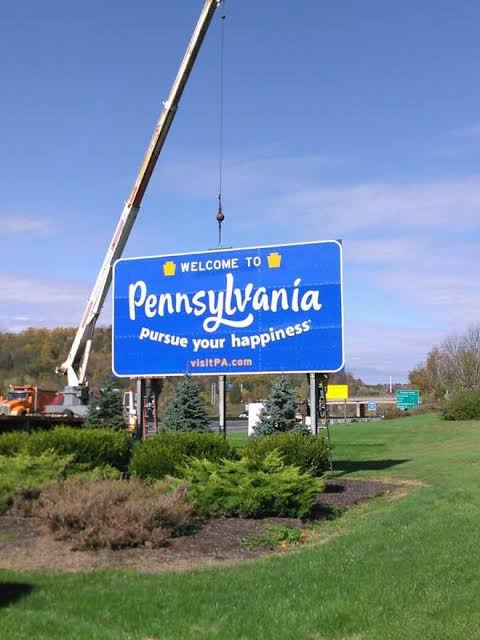
Dauphin County has about 289,000 residents, with Harrisburg — Pennsylvania's capital — at its centre alongside Hershey, Middletown, Steelton and the Lower Paxton suburbs. State government is the dominant employer, and the county's crypto significance is regulatory rather than commercial.
The Pennsylvania Department of Banking and Securities is headquartered here. The General Assembly meets here. The Office of Attorney General's consumer protection work runs from here. Whatever rules apply to crypto in the Commonwealth were made within a few blocks of the Capitol.
- What PA DoBS decides — and how to use it
- Legislation moving through the Capitol
- Kiosk coverage in the Harrisburg area
- Crypto and Pennsylvania state government
- Why the 2024 reversal matters more than it looks
- How to buy crypto in Dauphin County
- Routes and costs compared
- Exchanges serving Dauphin County
- Towns & municipalities covered
- FAQ
What PA DoBS decides — and how to use it
The Department regulates money transmission in Pennsylvania. Its position on cryptocurrency reversed once, decisively. In January 2019 it stated that virtual currency was not "money" under the Money Transmission Business Licensing Law, so exchanges and kiosk operators needed no state licence. On 20 April 2024 it issued a policy statement reversing that interpretation, effective 15 October 2024.
From that date, persons transmitting virtual currency for a fee are expected to hold a Pennsylvania Money Transmitter Licence.
The practical benefit for you is a verification tool. Look up any company in NMLS Consumer Access for state licensing and the FinCEN MSB registrant search for federal registration. Both are free and take a minute. See our PA crypto law guide.
Legislation moving through the Capitol
Senate Bill 1015 — the Virtual Currency Kiosk Regulation Act — was introduced in September 2025 and received a committee hearing in April 2026. It would require kiosk operators to be licensed by PA DoBS and to comply with daily transaction limits, fee caps, identity verification, pre-transaction fraud warnings, live 24-hour customer support, detailed receipts, blockchain analytics, written anti-fraud policies including protections for older and vulnerable adults, and quarterly location reporting.
The House passed HB 2481 in October 2024, establishing protections for self-custody and crypto payments. HB 2664, which would have authorised allocating state reserves to bitcoin and crypto ETPs, was referred to House Finance and expired without enactment.
Direction of travel: licensing and consumer protection at the kiosk layer, not restrictions on individual ownership.
The cheaper route for Dauphin County
A licensed platform holding Pennsylvania Money Transmitter Licence 112703, FinCEN MSB registration and NMLS ID 1804170 — bank funding, published fees, and none of the spread a cash kiosk hides.
Kiosk coverage in the Harrisburg area
Downtown Harrisburg has limited coverage — the government core is not a cash economy. Allison Hill and the Derry Street corridor carry several machines, and Cameron and Paxton Streets have gas-station installations.
The main suburban cluster is along Jonestown Road and Route 22 through Colonial Park and Lower Paxton. Across the river, Camp Hill, Mechanicsburg and the Carlisle Pike corridor in Cumberland County carry significant coverage — several of the nearest machines to downtown are technically outside Dauphin County.
Hershey and Hummelstown have a small number. See our Harrisburg city guide.
Crypto and Pennsylvania state government
Pennsylvania does not accept cryptocurrency for state taxes, licence fees or fines. The Department of Revenue accepts dollars through conventional channels. Nor does the Commonwealth hold cryptocurrency in its treasury.
State employees should check agency ethics guidance before trading — some roles at agencies with banking or securities oversight carry restrictions on holding assets in regulated sectors, and crypto is increasingly named explicitly.
PSECU, headquartered in Harrisburg, banks a very large share of state employees and processes transfers to licensed exchanges without unusual friction.
Why the 2024 reversal matters more than it looks
Dauphin County houses the agency that decides which crypto companies may legally serve you, and its position changed once, decisively.
Between 2019 and 2024 the Department of Banking and Securities told the industry that virtual currency was not "money" under the Money Transmission Business Licensing Law, and therefore not licensable. Operators structured around that. Then in April 2024 the Department reinterpreted the same statute the other way, effective that October.
The practical consequence for consumers is that "we have operated in Pennsylvania for years" stopped being a meaningful credential, because most of those years predate the requirement. What counts now is a current licence number you can look up.
When we assess a platform for Pennsylvania readers, that lookup is the first thing we do — before fees, before features, before anything else. It takes ninety seconds and it reflects today's status rather than a marketing page's.
How to buy crypto in Dauphin County, step by step
The sequence below applies anywhere in Dauphin County, from Harrisburg out to the smallest township. Nothing about it changes by municipality — Pennsylvania licensing and tax rules are statewide, and every licensed exchange serves every ZIP code in the county on identical terms.
- Choose a platform that holds a Pennsylvania licence
Since 15 October 2024 the Department of Banking and Securities expects businesses transmitting virtual currency for Commonwealth customers to hold a Money Transmitter Licence. Look any company up in NMLS Consumer Access and the FinCEN MSB registrant search before you deposit anything.
- Verify your identity
A PennDOT driver's licence or state ID, your Social Security number or ITIN, a Dauphin County residential address and a short selfie. Usually cleared in under ten minutes. Non-citizens can generally verify with an ITIN and supporting documents.
- Link a bank account and fund by ACH
Free to move, one to three business days to settle. A first transfer may draw a manual fraud review at a community bank or credit union — that is protective, and a branch call clears it. A small $50 first transfer establishes the pattern and avoids delays later.
- Place a limit order, not an instant buy
The single most expensive habit in retail crypto. The same platform, the same asset and the same minute can cost one to three percent more through the one-click widget than through the order book. Find the advanced or pro tab on day one.
- Move long-term holdings to self-custody
Crypto on an exchange is not FDIC- or SIPC-insured. Once a position is large enough that losing it would change your circumstances, move it to a hardware wallet — see our custody guide.
- Export your transaction history annually
Pennsylvania taxes net gains at a flat 3.07% and does not permit capital loss carryforward, so accurate year-boundary records matter more here than in most states.
Routes and costs for Dauphin County residents
What separates a cheap purchase from an expensive one in Dauphin County is the funding method, not the platform. The table below shows what a $500 conversion actually yields on each route, with the exchange-rate spread included rather than hidden.
| Route | All-in cost | You receive | Bank account needed |
|---|---|---|---|
| Licensed exchange, ACH, limit order | ~0.8% | ~$496 | Yes |
| Licensed exchange, debit card | ~3% | ~$485 | Yes |
| Supermarket cash-to-crypto kiosk | ~5–16% | ~$460 | No |
| Standalone crypto ATM | 8–23% | ~$425 | No |
The gap between the top row and the bottom is about $71 on a single $500 purchase. Repeated monthly by a Dauphin County household, that is over $850 a year for exactly the same asset, held in exactly the same wallet.
Two Pennsylvania-specific points follow the purchase. The Commonwealth taxes net gains at a flat 3.07% with no progressive brackets and no preferential long-term rate, and no Dauphin County municipality levies income tax on investment gains — local earned income taxes apply to wages only. And Pennsylvania does not permit capital loss carryforward, so if you hold both winners and losers, realising them in the same calendar year rather than across a December–January boundary can meaningfully reduce your state bill. Our tax guide works through the arithmetic.
Exchanges available across Dauphin County
Platform availability does not vary by Pennsylvania county — every licensed exchange serving the Commonwealth serves Dauphin County. What varies is which funding method makes sense for you, and that is where most of the cost difference lives.
| Platform | Best for | Typical trading fee | Funding methods | Min buy |
|---|---|---|---|---|
| CEX.IO | Licensed cash-in with full PA coverage | Spot from ~0.25%; card buys higher | Card, ACH, domestic wire, balance | ~$20 |
| Coinbase | First-time buyers who want a name they recognise | Advanced 0.00–0.60%; simple buys higher | ACH, debit card, wire, PayPal, balance | $2 |
| Kraken | Low-cost spot trading and staking | Pro maker ~0.25% / taker ~0.40% | ACH, wire, debit card, balance | ~$10 |
| Gemini | Custody-conscious buyers and estate planning | ActiveTrader ~0.20% / 0.40% | ACH, wire, debit card, balance | $1 |
| Crypto.com | Mobile-first users who also want a spend card | Exchange from ~0.075%; app spread ~0.5%+ | ACH, debit/credit card, wire, balance | ~$1 |
| Bitstamp | Straightforward spot buying with no gimmicks | From ~0.30% / 0.40% | ACH, wire, card, balance | ~$25 |
Fee schedules verified August 2026 and subject to change without notice. Always confirm the live schedule on the operator’s own site before trading.
Before funding any account, verify the operator's licensing yourself in NMLS Consumer Access and the FinCEN MSB registrant search. Both are free and take a minute each. Our Pennsylvania crypto law guide explains what the licence actually means.
Towns and municipalities in Dauphin County
The guidance on this page applies across the county. These are the larger communities where readers most often ask about local coverage:
- Harrisburg
- Hershey
- Middletown
- Steelton
- Hummelstown
- Lower Paxton
- Susquehanna Township
- Halifax
- Elizabethville
- Highspire
Detailed city guides in Dauphin County
Dauphin County crypto FAQ
Do crypto companies need a Pennsylvania licence?
Yes. Following a policy statement issued 20 April 2024 and effective 15 October 2024, PA DoBS interprets "money" under the Money Transmission Business Licensing Law to include virtual currency. Businesses transmitting it for a fee are expected to hold a Money Transmitter Licence.
How do I check whether a platform is licensed in PA?
Search NMLS Consumer Access for state licensing and the FinCEN MSB registrant search for federal registration. Both are free public databases and take about a minute each.
Can I pay Pennsylvania taxes in cryptocurrency?
No. The Department of Revenue accepts US dollars only. Your gains are taxable at Pennsylvania's flat 3.07% but the payment must be in dollars.
Is Pennsylvania going to ban crypto ATMs?
No proposal before the General Assembly would ban them. Senate Bill 1015 would regulate them — licensing, daily limits, fee caps, fraud warnings, live support and quarterly reporting. The direction is regulation, not prohibition.